Mennuli!

Almonds!

We completed our first Almond harvest a few weeks ago.

I have vague and happy memories of almond harvest as a very little girl. My memories are mostly about having fun and running around while my exteded family processed the crop for market. I recall everyone around a table talking and laughing while shelling almonds. Rose’s memories are more realistic and maybe not so much fun.

In my parents’ and grandparents’ time, Almonds were an important cash crop. A good harvest could provide income to maintain the family for an entire year. They worked very hard picking Almonds during the heat of the day and shelling and processing by lantern light at night.

The image below features: my maternal grandfather Pietro, my mother Lucia, my sister Rose holding my younger sister Nina while they are shelling Almonds. It is a little dark, but I love everything about it: the prickly pear cactus background, the wooden chairs, the pile of almonds, my grandfather in his cap, my mother’s natural beauty, and Rose smiling and lifting Nina up to the camera lens.


Arricampari Mennuli (Harvesting Almonds)

Arricampari (Pronounced Ah-rrii–cahmpa-rih) means “to bring home.”

We don’t have a lot of Almond trees at my house, and once again, it was not a great agricultural year. Due to the small scale of the harvest, Arricampari is done the same way my ancestors did it…by hand.

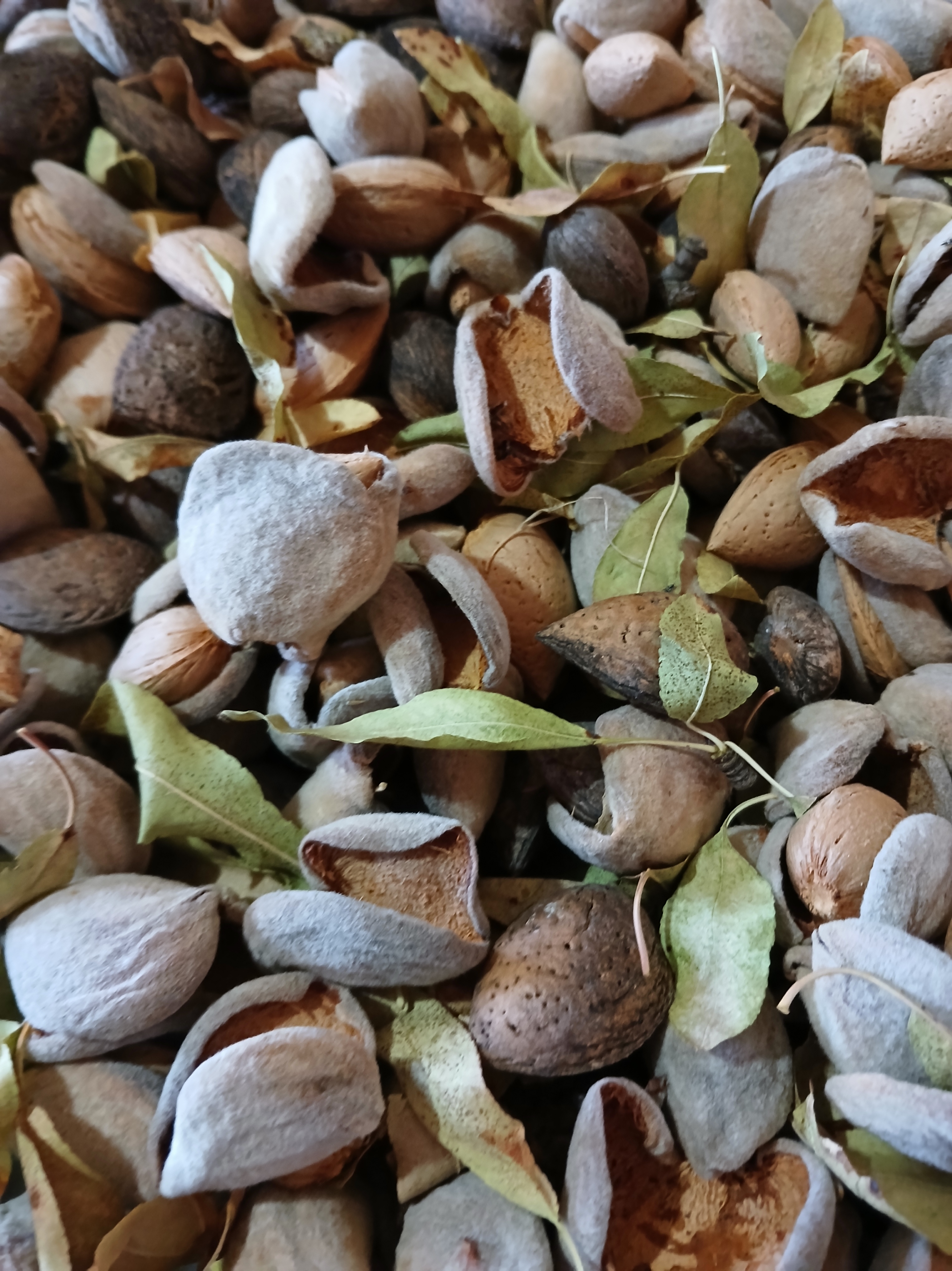
Almonds have a green outer hull and a hard inner shell covers the Almond kernel. They are ready to harvest when the hull dries and splits open, revealing the shell. As with the olive harvest, large nets are spread under the trees to catch the nuts.

Here are the steps:

  • Scutulari (Pronounced skuuh-tuuh-lahree) (Dropping the Almonds) The literal translation of Scutulari is “shaking.” Large agricultural concerns have machinery that shakes the tree trunk to release the ripe Almonds. At my house, Signor Raimondo used a wooden pole to strike the branches and knock the Almonds out of the trees and on to the nets. Signor Raimondo then gathered the Almonds and placed in sacks for processing.
  • Scricchiari (Pronounced skri-kkiah-ree)(Removing the hull) Rose and Angelo and I took over this step with sporadic assistance and supervision from Rose’s three year old granddaughter, Giorgia. Our task was to separate the nuts from the hulls. Most of the time, the Almonds naturally fall out of the hulls during the Scutulari step. In that case, it is a matter of sorting out the Almonds and discarding the hulls. Sometimes the hull clings stubbornly. It must be manually removed by striking with a blunt object like a stone or hammer. We set up piles of Almonds on the kitchen table and pounded, sorted and hulled over several afternoons.
  • Scacciari (pronounced skah-chiah-ree) Removing the shell. This is the hard part of Almond harvest. We have two varieties of Almonds. One is soft and easy to shell, the other has a much harder shell that requires some effort to remove. Below are the hard shell variety, the inside of the shell is pretty and smooth, but difficult to open. I am not very proficient at shelling, Rose is much better at it, but it is still difficult and time consuming. Angelo took pity on us and took over the Scacciari step for the hard shell variety. He retreated to the garage, cracked the Almonds with a mallet and brought us buckets of cracked Almonds to sort. Rose and I and Giorgia sorted the kernels and discarded the shells. Giorgia had a wonderful time and made the task much more entertaining. I hope her adult memories are of the fun she had shelling almonds with her Nonno (Grandfather) Nonna (Grandmother) and Zia (Aunt.)

The result of our Almond Harvest are a large container of shelled Almond kernels, and a sack of unshelled Almonds to process as needed. My plan is to try to grind some for Almond flour (a new activity for me…hope it works.) Will use some for baking and snacking and plan to sell some to a local vendor.

We trimmed the trees after the harvest and it has rained a bit. Hopefully the almond trees will thrive with the care they are receiving. Looking forward to Spring for Almond trees in flower.
Ogliu Extra Vergine!

Extra Virgin Oil!

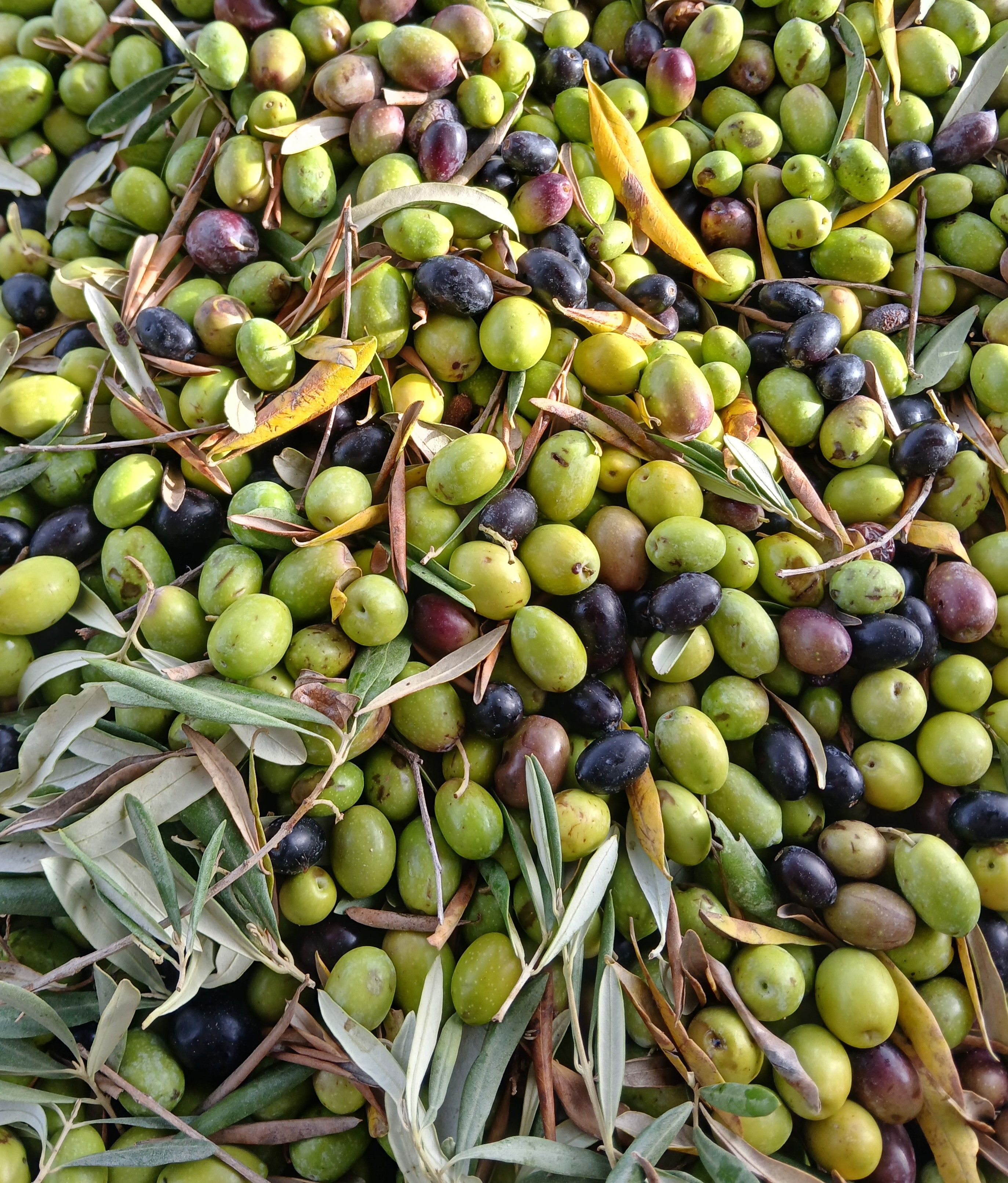
We harvested Olives from the grove at my new house! They are so pretty!

It was a hot, dry growing season and I am told that it was not a good year for olives. However, we harvested over 320 Kilos of olives and pressed 60 liters of extra virgin olive oil.

Signor Raimondo managed the harvest. He works early in the morning so I was not able to capture pictures of the harvest process at my house.

The following pictures are of my cousins, Vincenzo and Alfonso. They are retired businessmen who live in Belgium but have a beautiful summer house in Aragona. These photos illustrate the process of manually harvesting olives. The olives are raked off the trees and dropped on large nets on the ground. The olives are then gathered and transported to the Oleficio (olive press) as soon possible.


Olificiu!

The olives were pressed the same day that the harvest was completed.

Pressing was efficient and automated, the equipment was stainless steel and manned by technicians.

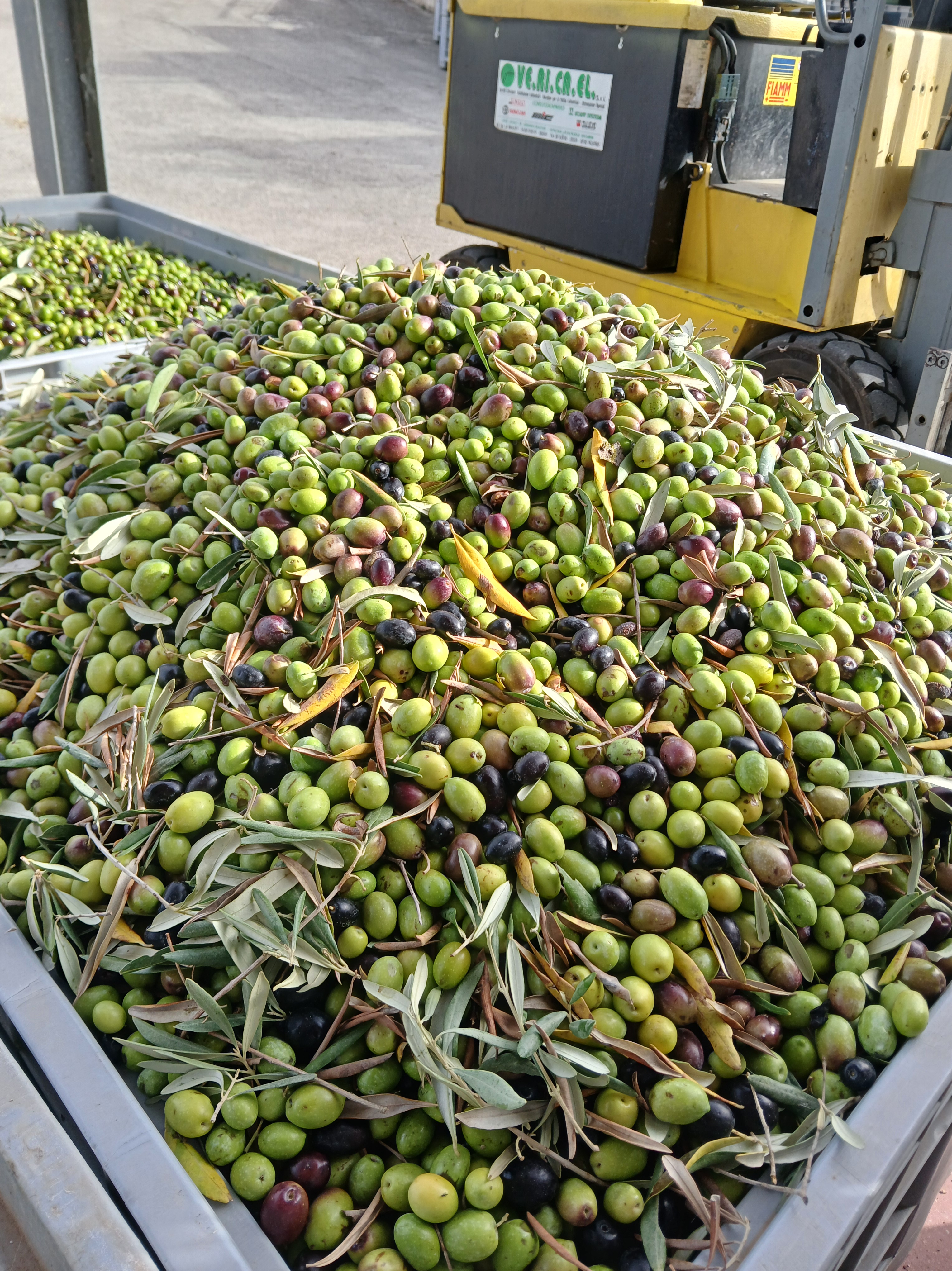
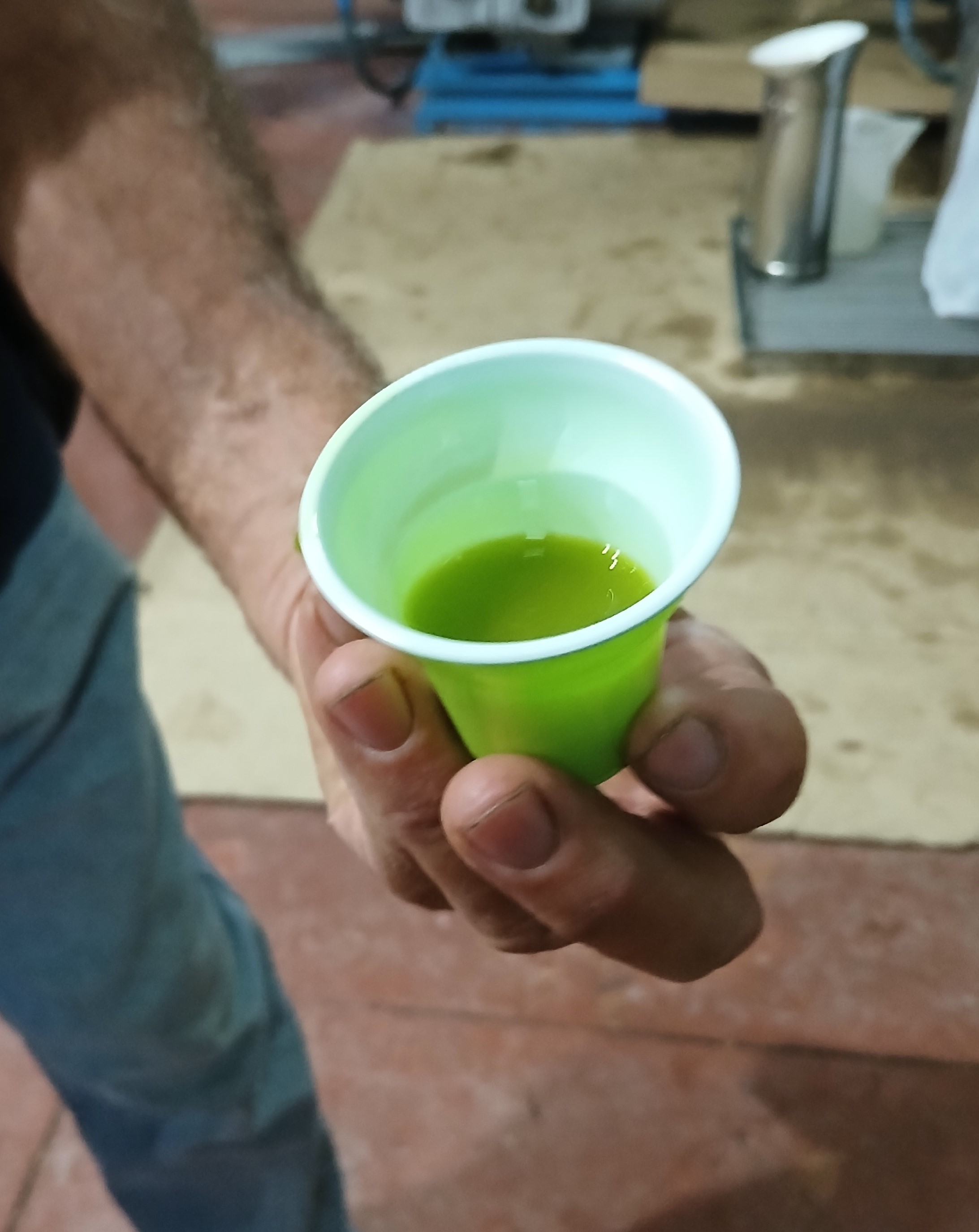
A fork lift dropped my olives into a hopper and conveyor belts moved to each machine. The olives were cleaned, crushed and stirred and mixed. We were able to follow our olives through each operation. We waited intently until our oil emerged from the press! It is not grocery store oil! The color is green and the flavor is strong. We set it aside to settle and mellow. It should be ready to use in a month.

I am grateful to have found Signor Raimondo. He is very knowlegeable and is passionate about agriculture. He steered us through this first harvest and I am happy to have enough beautiful, organic olive oil to last at least a year.

Signor Raimondo is now in the process of giving the olive trees a much needed trim and getting ready for future harvests!

Ulivi! (Olives!)

Passuluna Moderni

We are anticipating our main Olive Oil Harvest. Because olives are pressed immediately after harvest, we have to wait until the local Oleficio (Olive Press) is open for business for the season and Signor Raimondo (the gentleman who is helping me with my orchard) has time to manage the harvest.

In the meantime, Rose is has been busy preserving ripening olives for our home use. It is a multi-step process and she has been working on them for the last couple of weeks. She disappears into her little kitchen workspace periodically, and works on the various types of olives. Here are the procedures Rose has developed and follows:

Passuluna (Oil Cured Olives)

“Passula” is Sicilian for Raisin. “Passuluna” (pronounced pah-ss-uh-luh-nah) is a ripe olive that is treated with salt until it loses some of its moisture and becomes wrinkled, literally a large raisin.

There are specific black Passuluna varieties of olives. There is a Classic Variety that I don’t have in my olive grove and a Passuluna Moderna (Modern Variety) that I do have in my olive grove. Signor Raimondo gave us a bucket full of Classic Passuluna and we harvested a bucket of Passuluna Moderna. Rose has been working with both of them.

Passuluna Processing Steps

  • Harvest olives when they turn black.
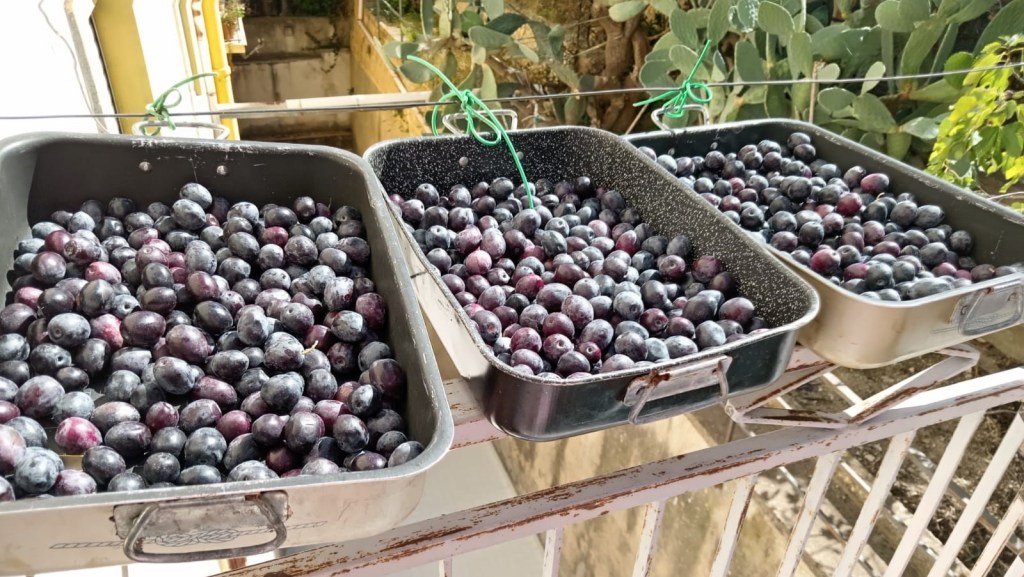
  • Spread ripe olives in trays or racks and place in sun. This process may take several days. (We bring them inside at night.) They are ready for the next step when they begin to wrinkle.
  • Place sun cured olives in bowl, add small amount of salt and mix often. This process can take several days as well. They are ready for the next step when the olives are soft to the touch and wrinkled.
  • Wash olives several times to remove excess salt.
  • Blanch the olives: Place in boiling water. When water returns to boil, cook for about three minutes.
  • Drain well, cool, and blot dry with a clean towel.
  • Add olive oil to coat the olives, stir well, place in plastic bags or freezer safe containers and freeze.
  • Rose likes to freeze in “single-serving” portions, which for her, means one to two cup containers.

Passuluna are ready to be enjoyed as appetizers, or in cooking. Rose uses Passuluna in pizza, seafood dishes, stews, breads, wherever a salty, slightly bitter bite makes sense.

Completed Passuluna


Ulivi Scacciati (Crushed Olives)

Ulivi Scacciati (pronounced uh-leevee ska-chih-ah-tee)

Rose is also preserving green olives. This version uses a salt and water brine as a preservative. She disappeared into her work kitchen, following a pounding sound, we found Rose cracking green olives with the bottom of a heavy water glass. This is the first step to making Ulivi Scacciati.

Ulivi Scacciati Processing Steps

  • Crush olives. Rose uses a thick water glass. I have used a meat pounder.
  • Soak crushed olives in room temperature water, changing the water at least once a day for 3 days.
  • After the 3 day soak, drain olives.
  • Prepare brine. For each kilo of olives, combine 1 liter of boiling water and 100 grams of salt. Stir until salt dissolves and cool brine.
  • Add crushed olives to brine ensuring olives are covered with liquid.
  • If desired, add bay leaves and/or rosemary, and garlic.
  • Let stand at room temperature for at least 15 to 20 days.
  • Olives are ready to use when they are no longer bitter.

Ulivi Scacciati can be served as an appetizer or side dish or they may be used in recipes. There are many variations for seasoning Ulivi Scacciati. Rose’s preferred seasoning for an appetizer is: Olive Oil, sliced celery, grated carrots and red pepper flakes and a bit of minced or sliced garlic.

Completed and Seasoned Ulivi Scacciati