L’Ortu (The Garden)

I moved into my house in late April, a little late for Spring planting here. While waiting for my house to be completed, I envisioned and planned a vegetable and flower garden in an open area in front of my entry door.

When I finally moved in, I found that my soil is rocky and hard and dry. I am told it is suited for trees and, indeed, I have Olive and Almond trees, a huge Walnut tree, several varieties of Pears, Plums, Mulberries, Oranges and Lemons. Signor Raimondo trimmed all of the trees, (I captured an image of him giving the olives a haircut last week) they are healthy and beginning to produce. We are enjoying discovering the succession of beautiful fruits as they ripen.

I was also told that my soil is not suited for vegetables. I have always had a vegetable garden! I did the planting and my mother nurtured the plants. After my mother passed, I downsized and managed to grow our favorite vegetables.

My situation is different now, I have mobility issues, lots more land and the land is difficult. I spent a sleepless night contemplating how I could make my dream of a garden a reality. I did some research, detemined that a raised bed garden was the solution and ordered a tall raised bed. As for the flowers, I would have to inspire my family to help me sow some seeds and plant some perennials. My dream was much smaller but I was going to make it work.

While waiting for my raised bed to arrive, Signor Raimondo came by to check on my trees. He asked me if I wanted him to plant some vegetables. My response was and emphatic: Yeeessss! He left for a couple of hours and came back with a hoe, a bag of fertilizer and a bunch of plants. When I lamented that my soil wasn’t very good, he told me that “if we plant them things will grow.”

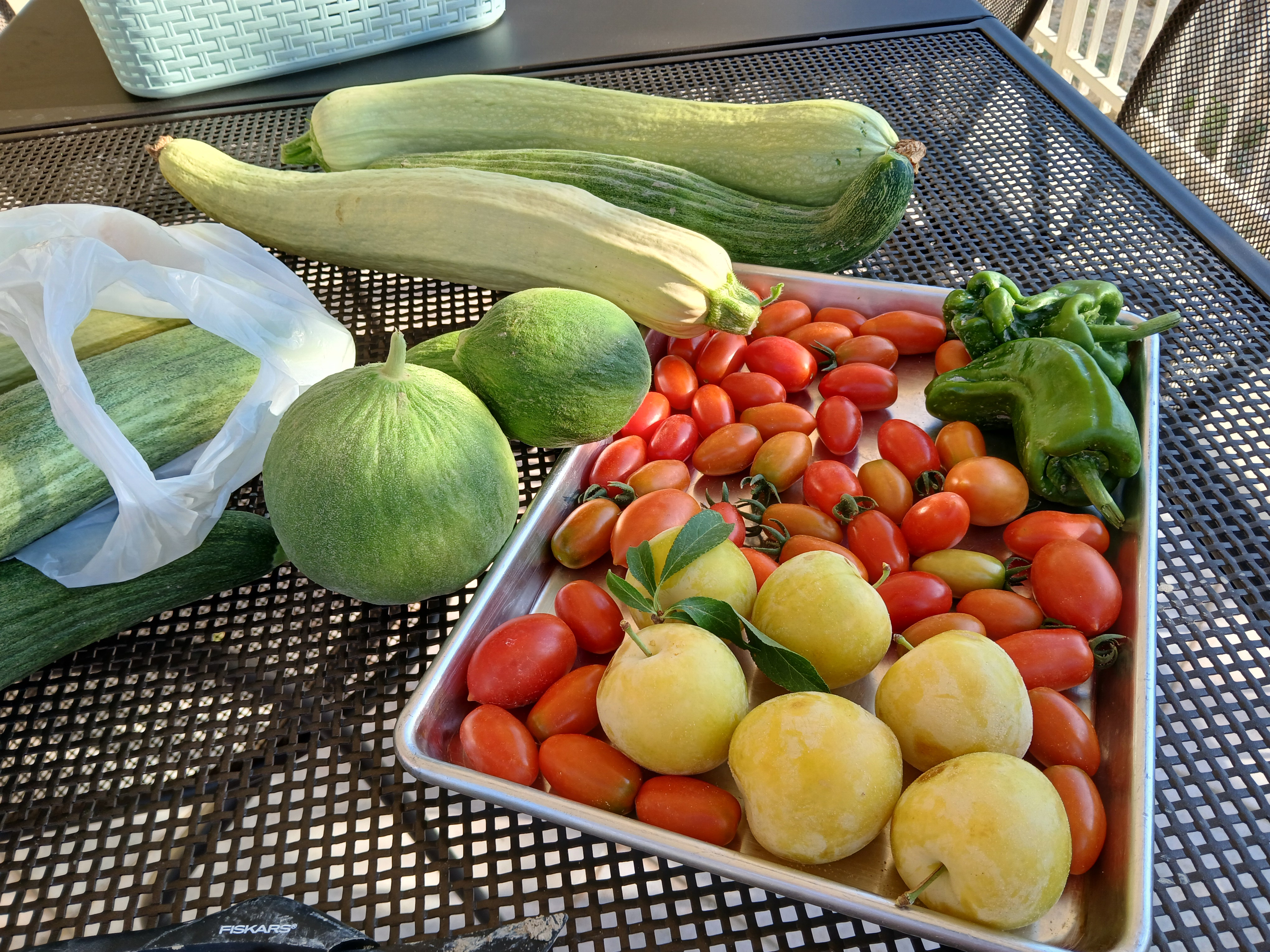
He proceeded with my garden, he dug some holes, tossed in a handful of fertilizer in each, and planted a variety of vegetables. Within a few hours I had an extensive vegetable garden! We are in Sicily so, of course, I needed tomatoes: some for salad, Pizzutello for sauce, cherry tomatoes, San Marzano type…30 tomato plants in all. We also have Zucchini, Melons, Green Peppers, Green Beans, Celery, Parsley, Collards, Cucumbers, Squash, White and Purple Eggplants and our traditional Cucuzza. My brother-in-law Angelo and sister Rose have been diligently watering to keep everything alive and thriving.

Signor Raimondo was right, the garden has grown and we (and our extended family) have enjoyed harvesting and eating beautiful produce. There was a point when anyone who came to my house (including the Amazon courier) had to leave with a cucumber, zucchini or tomato.

I did receive my raised bed, my family helped me prepare the soil and I am nurturing Green Beans, Beets, Cutting Lettuce and Dill. I plan to add additional herbs that I have not found at the greengrocer.

I am so grateful for the help I have received in making my dream of a garden come true. Without Signor Raimondo and Rose and Angelo, I would still be looking forlornly at my dry pile of rocks instead of exploring traditional Sicilian recipes for my traditional Sicilian produce.

Cusiri Cu Me Soru

Sewing With My Sister

I spent the last year living with my sister Rose, and my brother-in-law, Angelo. They made me feel welcome and comfortable. Rose did all the cooking, cleaning, laundry, planning and organizing. I had no household responsibilities, so I looked for a way to pass the time productively.

I found Rose had a stash of embroidery fabric and embroidery thread in every color. I cannot draw or design, but I can count. Counted cross stitch seemed like a good way to pass the time. I searched the internet, found inspiration and spent most afternoons embroidering. I worked diligently on each project to the amusement of my family.

I accumulated several finished pieces with the vague intent to give as gifts or to accessorize my new house.

I finally moved into my house (before and after pictures will follow soon) and determined to finish my embroidery projects. Rose and I have dedicated several afternoons turning some of my embroidery into accent pillows for my veranda furniture.

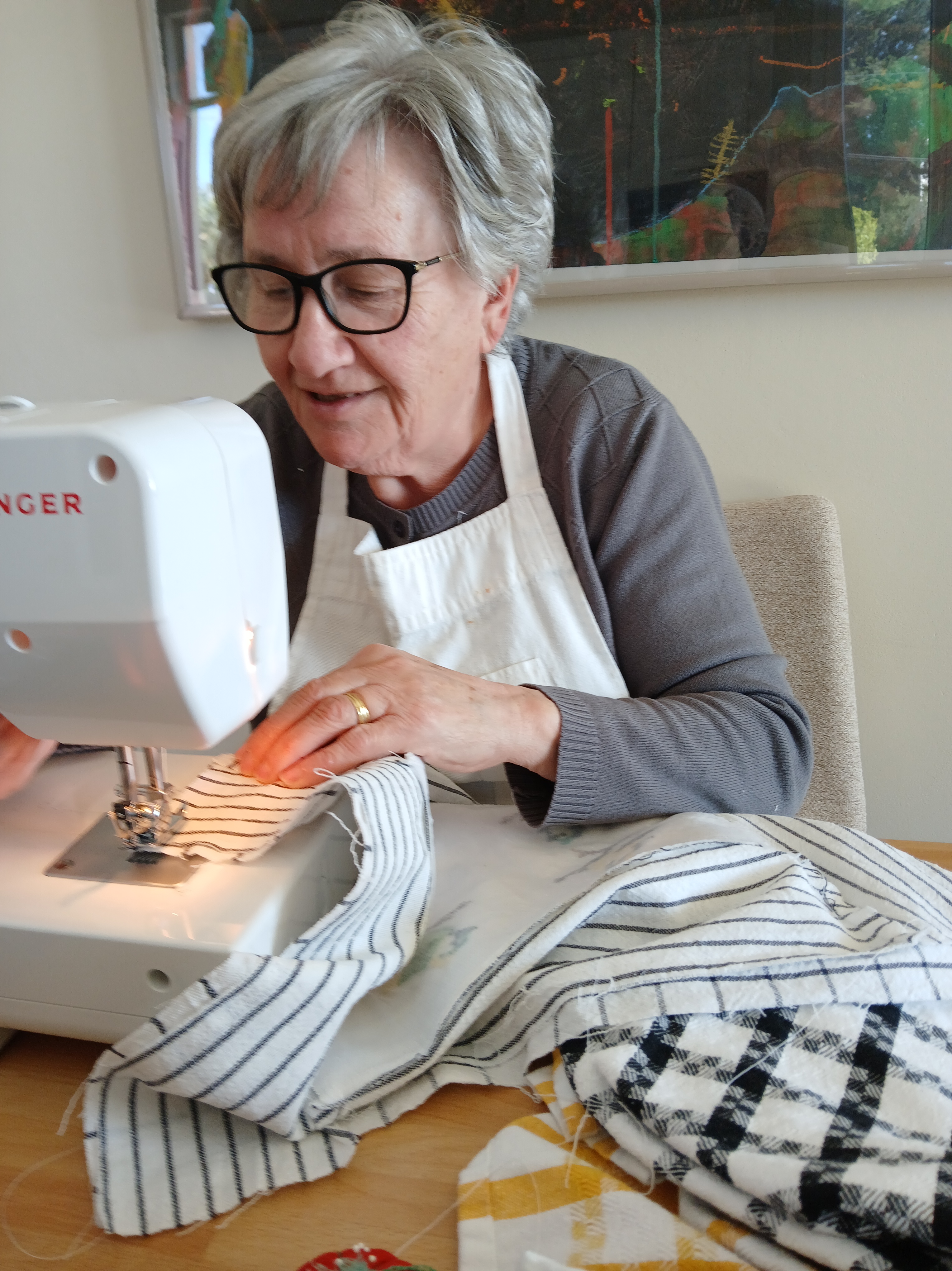
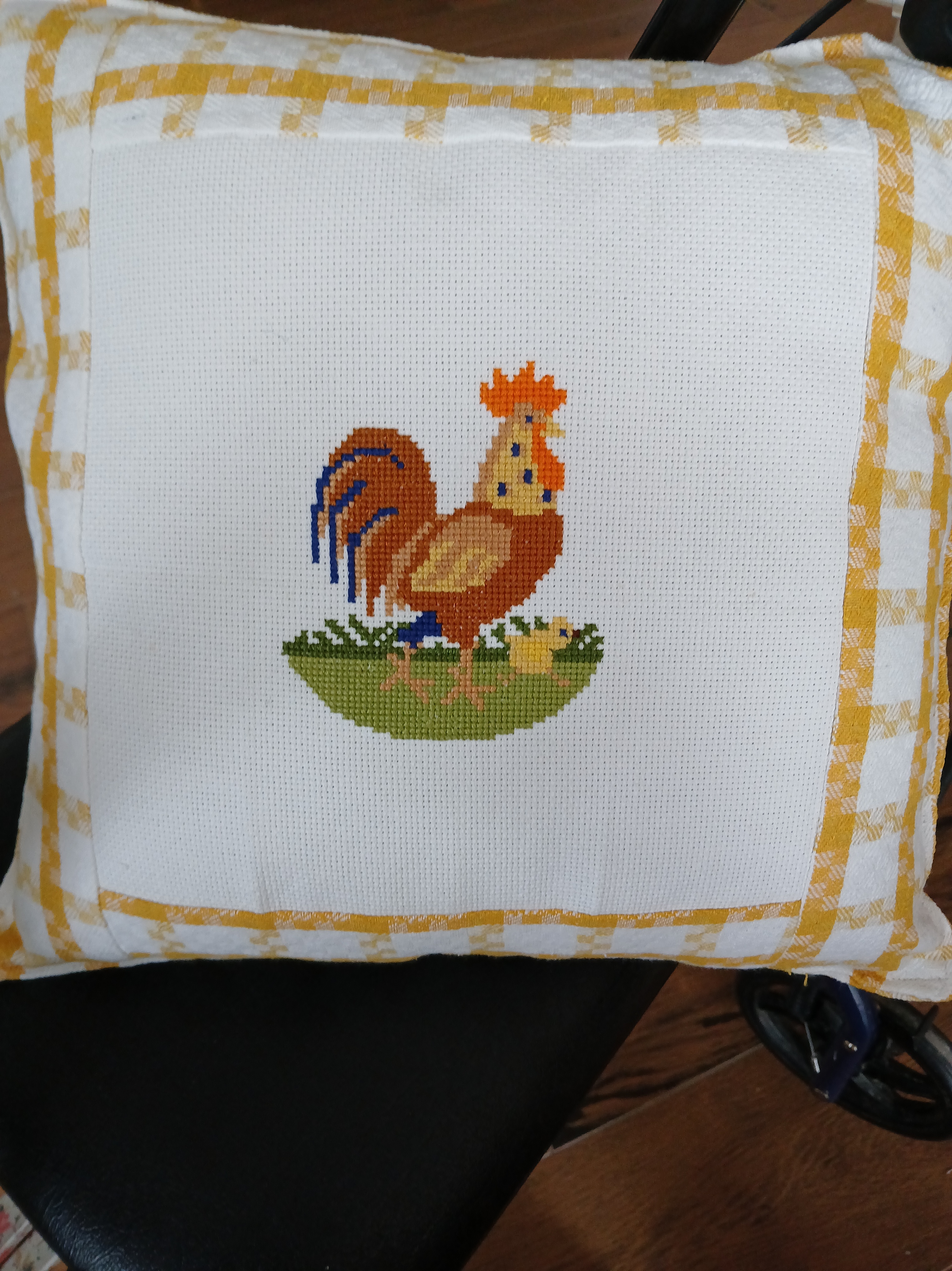
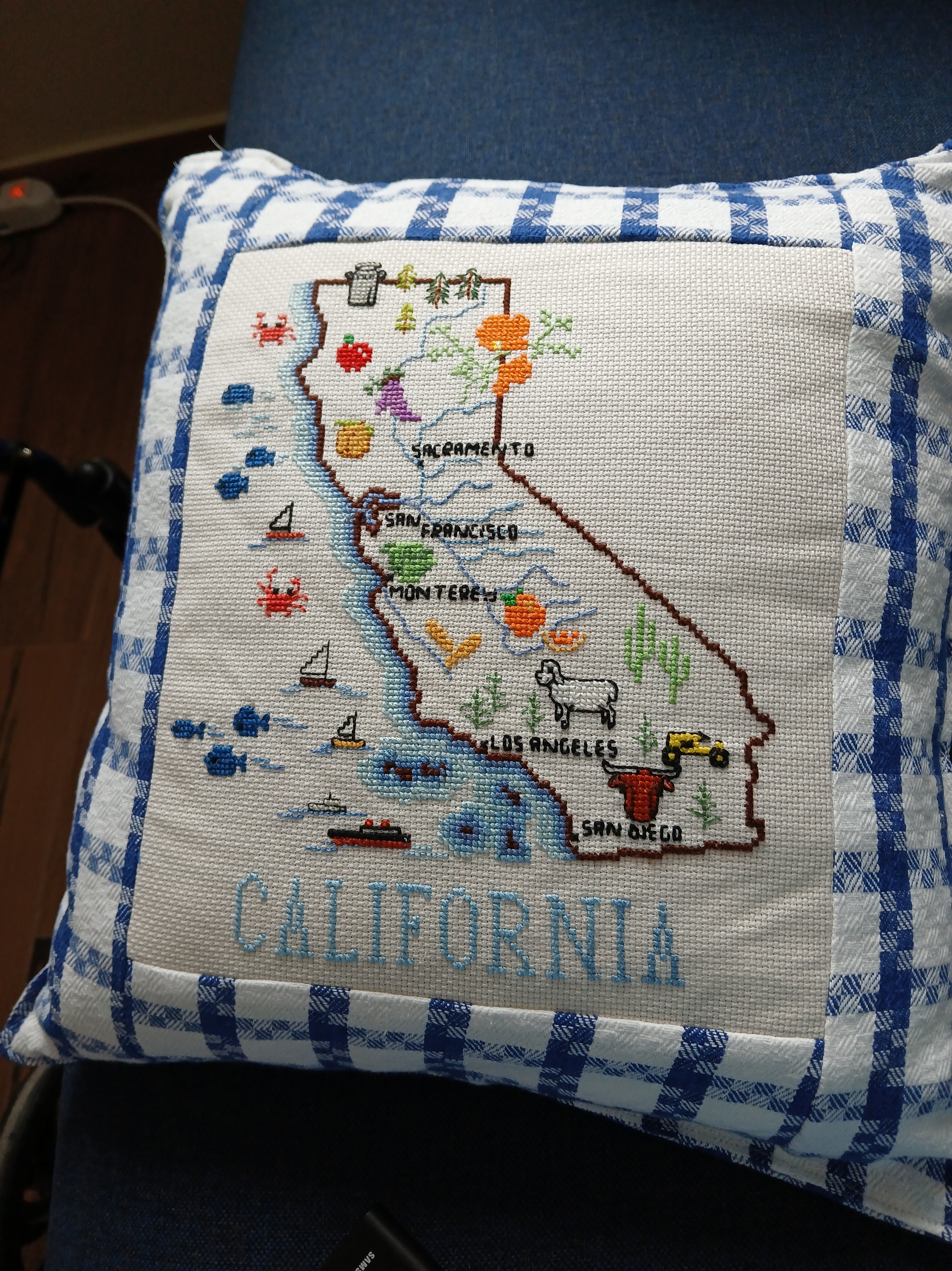
We developed a plan to complete them economically, worked out our glitches and got efficient. Working together was fun, I cut and Rose sewed. We named them: Ucellini (Birds), Gallo Giallo (Yellow Rooster) and La California (tribute to my former home.) We are very pleased with the finished projects!

Cucinari Cu Me Soru! (Cooking With My Sister)

Rose and I have been having a lot of fun trying out recipes using ingredients from my land. We have an abundance of Arangi (Oranges) and of course, sacks of Mennuli (Almonds.)

I am committed to using our own ingredients and not wasting anything. We have been experimenting with recipes from the internet. (I will be happy to share the recipes we have tried but will not publish here since they are not original. Please contact me and I will send.) We have enjoyed the results and feel we have perfected a couple.

Here are the results so far:

Farina di Mennuli (Almond Flour)

We ground our own Farina di Mennuli using my high speed blender. It is a simple process. However, it has proven to be labor intensive because we want to attain a fine grind without making almond butter. I plan to investigate other grinders. In the meantime, we have avoided the butter stage by doing an initial grind, then sifting the Farina di Mennuli (this is the annoying part) to separate the large pieces. We then do a second grind on the large pieces. The result is delicious, so I feel it is worth the effort. Also, if I ignore the investment I made in harvesting the Mennuli, it is cost effective compared to store bought Farina di Mennuli and the flavor is amazing. Rose is still willing to help me with this tedious process.

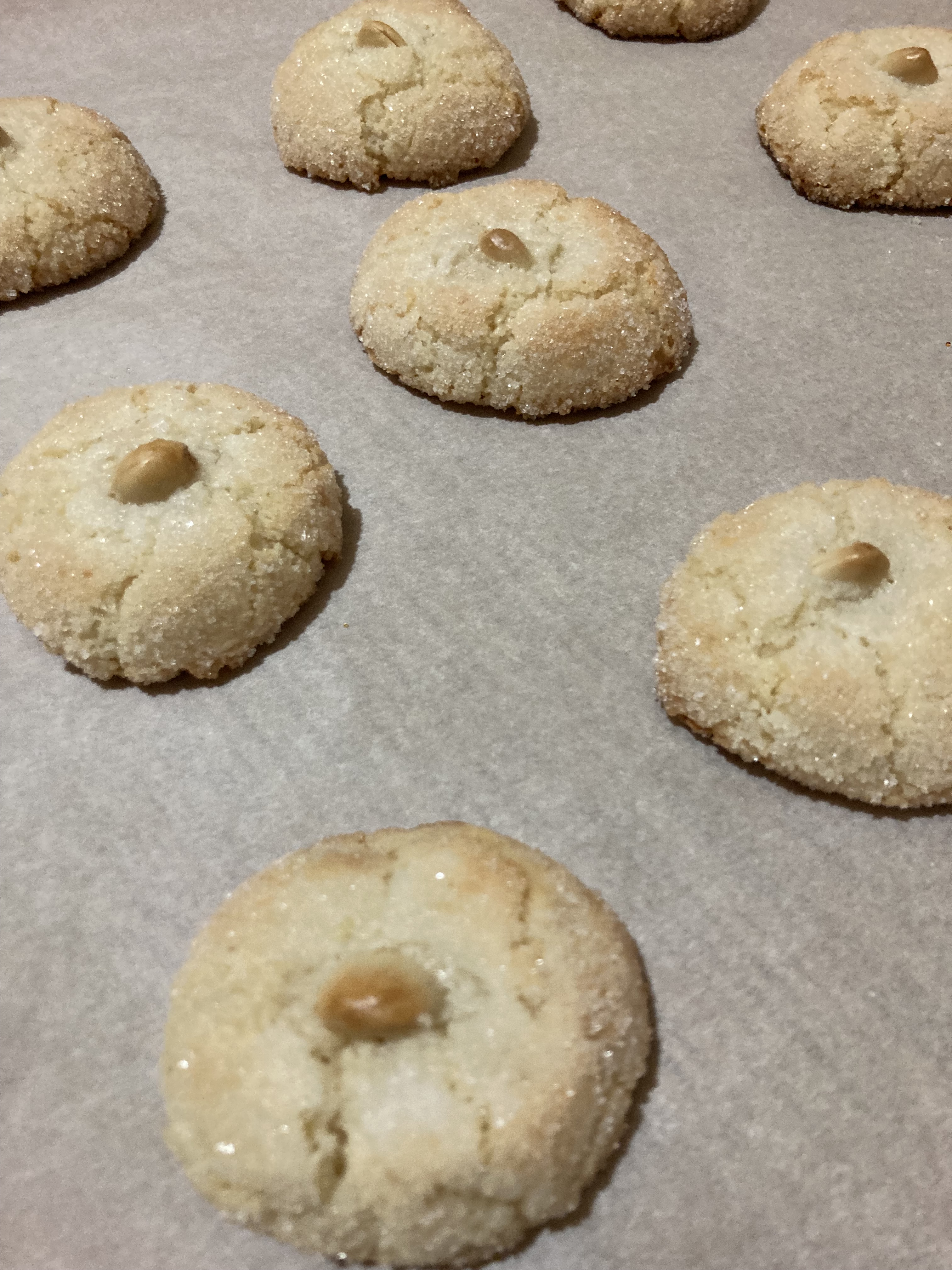
Pasti di Mennuli (Almond Macaroons)

We made this recipe several times using our own Farina di Mennuli and almonds. It is perfect! Using only 4 ingredients, this fabulous cookie is crispy on the outside, creamy on the inside and keeps well in an airtight container! We used to buy these from a local pastry shop because they were the best in town. Ours are better.

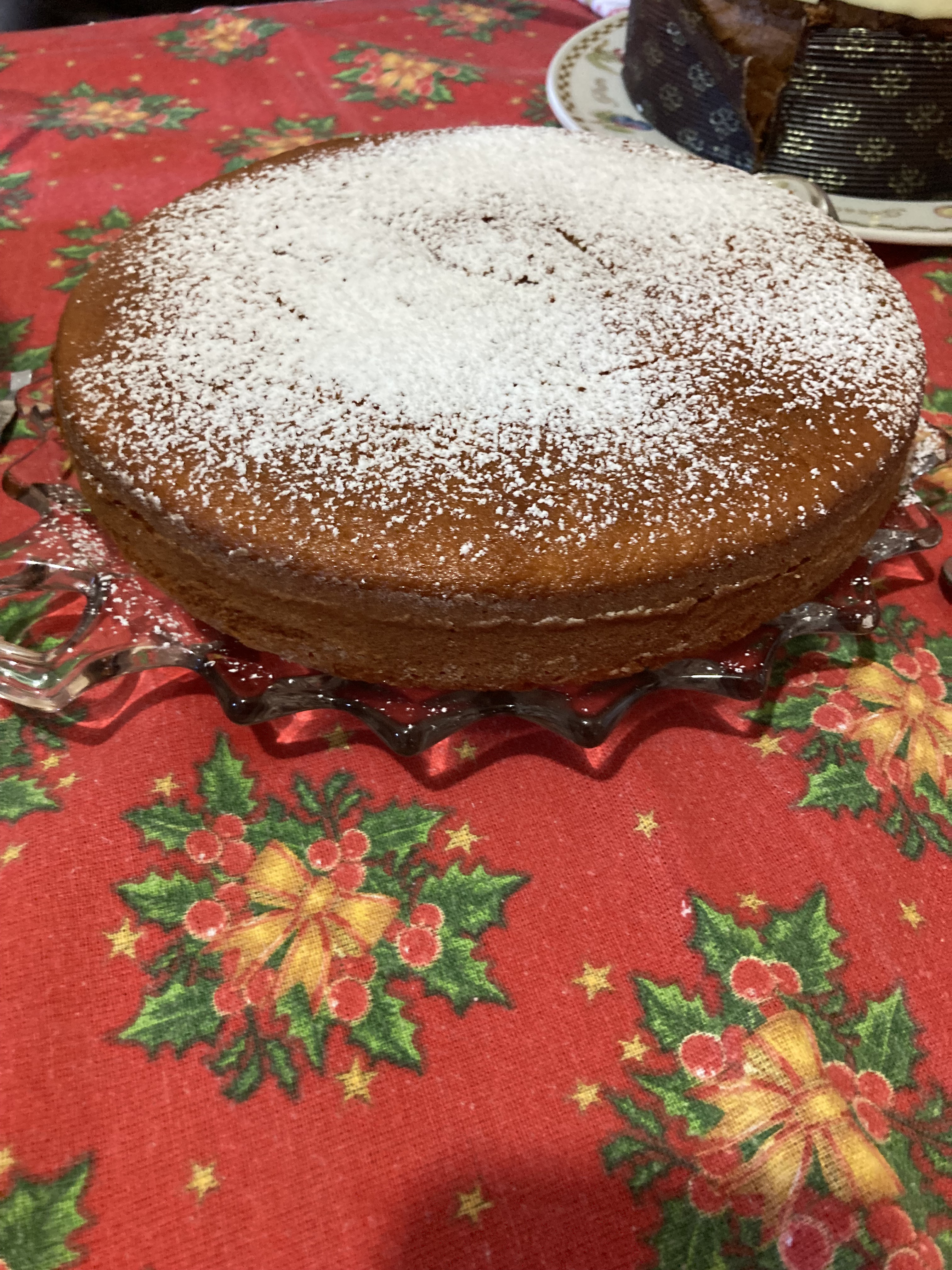
Torta di Mennuli

This is our Torta di Mennuli (Almond Cake)

It is also a wonderful recipe. The Torta is moist and flavorful, everyone loves it. We used Rose’s cheese grater/slicer to slice the almonds for the topping.

Arangi (Oranges)

We have lots and lots of Oranges! They have been gifted by our neighbors, Signor Raimondo has given us various varieties and I have several Orange trees of my own. They will not be wasted!

So far, we have squeezed juice for breakfast and for the freezer, used in Orange and Fennel Salads, made Orange Gelatine and a couple of delicious Torte All’Arangi (Orange Cakes.)

The Torta above, with the powdered sugar decoration, has two layers and is filled with orange curd and orange marmalade.

The Torta in the center is called a Ciambella (pronounced chi-ahm-bellah.) A Ciambella is a generic term for a cake that is baked in a pan with a center tube. We made it last evening using a spring form pan. It is a beautifully risen cake. It is light and fluffy and deeply orange flavored. It was a hit with the family. Next time we make it, we will slice into three layers and fill with our orange curd.

We used Blood Oranges for the Orange Gelatine pictured above. We love the color. The ingredients are Orange Juice, Sugar and Cornstarch. It is light and refreshing. Giorgia, Rose’s four year old granddaughter loves it and so do I.

Next on the agenda are Orange Marmalade and Candied Peels.

Chi C’e Nu Sachettu, 21 Innaru (What’s in the bag, January 21)

I have not highlighted Sacchettu contents in a while. Rest assured, we have continued to eat fresh, seasonal produce throughout the Fall and Winter. We have enjoyed fruit such as Cachi (Persimmons), Pira (Pears) and a variety of Agrumi (Citrus.) In addition to Angelo’s market purchases, Signor Raimondo has gifted us fruits and vegetables from his extensive garden. He has given us Zucca (Pumpkin,) Zarki (Swiss Chard) as well Carduni (Cardoons.) Rose has prepared five star meals for us and mealtime is always satifying.

Today the Sacchettu contained the first produce of the next season, Cacocciuli (pronounced Kah-koh-cchiuh-lee) Artichokes in English.

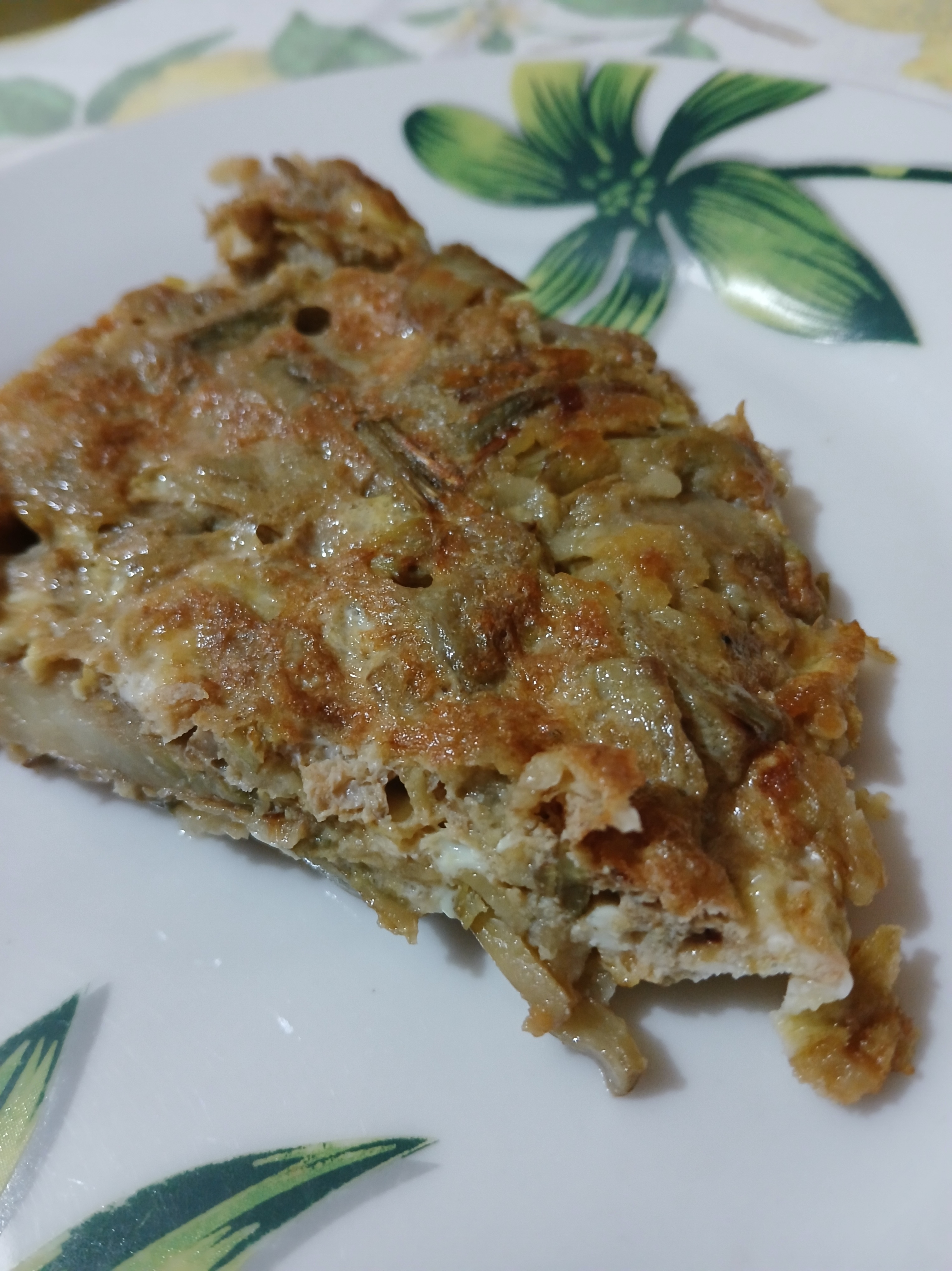
Rose used the hearts and the most tender stems to make a light, fluffy, delectable Frittata for our dinner.

Here is Rose’s process for the Cacocciuli Frittata:

  • Ingredients: Cacocciuli, eggs, flour, green onions and salt and pepper to taste. Rose used four Cacocciuli and three large eggs.
  • Remove tough outer leaves and cut Cacocciuli and tender stems into very thin slices
  • Place in lemon water until ready to cook
  • Drain Cacocciuli well and blot dry
  • Toss Cacocciuli slices in flour
  • Lightly saute’ green onion in olive oil
  • Add floured Cacocciuli and saute’
  • Lower heat, add a bit of water (to aid in cooking the Cacocciuli)
  • Cook, covered until water is evaporated and Cacocciuli are tender (add additional water, if needed, to complete cooking)
  • When Cacocciuli are tender, add beaten eggs and cook until eggs are set. Flip carefully and cook the top of the frittata.
  • Rose serves with crusty bread. We ate every bit!

Signor Raimondo, who is a wonderful person and gardener, planted ten Cacocciuli plants at my house. We are looking forward to harvesting Cacocciuli from my own garden next year!

Mennuli!

Almonds!

We completed our first Almond harvest a few weeks ago.

I have vague and happy memories of almond harvest as a very little girl. My memories are mostly about having fun and running around while my exteded family processed the crop for market. I recall everyone around a table talking and laughing while shelling almonds. Rose’s memories are more realistic and maybe not so much fun.

In my parents’ and grandparents’ time, Almonds were an important cash crop. A good harvest could provide income to maintain the family for an entire year. They worked very hard picking Almonds during the heat of the day and shelling and processing by lantern light at night.

The image below features: my maternal grandfather Pietro, my mother Lucia, my sister Rose holding my younger sister Nina while they are shelling Almonds. It is a little dark, but I love everything about it: the prickly pear cactus background, the wooden chairs, the pile of almonds, my grandfather in his cap, my mother’s natural beauty, and Rose smiling and lifting Nina up to the camera lens.


Arricampari Mennuli (Harvesting Almonds)

Arricampari (Pronounced Ah-rrii–cahmpa-rih) means “to bring home.”

We don’t have a lot of Almond trees at my house, and once again, it was not a great agricultural year. Due to the small scale of the harvest, Arricampari is done the same way my ancestors did it…by hand.

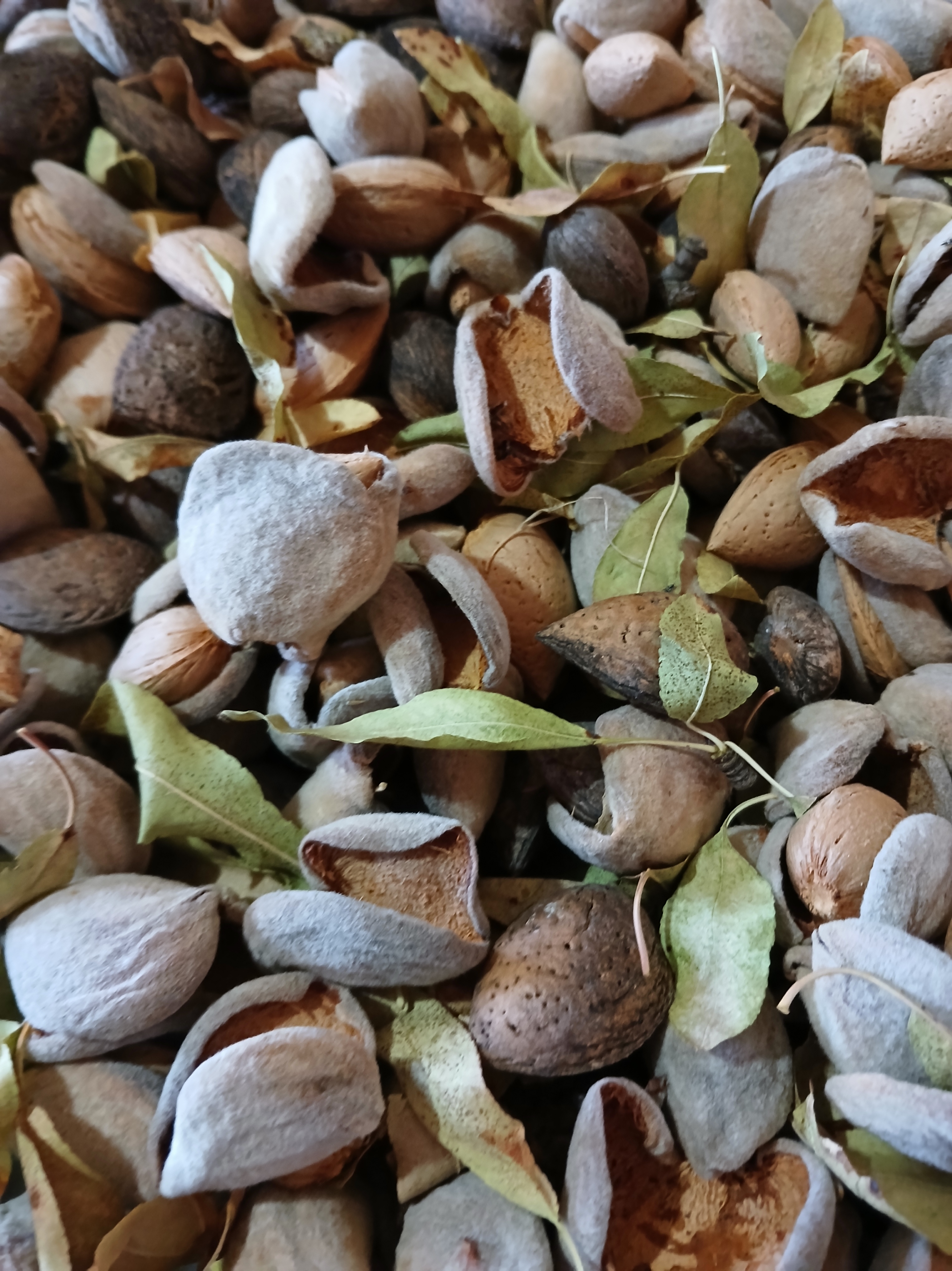
Almonds have a green outer hull and a hard inner shell covers the Almond kernel. They are ready to harvest when the hull dries and splits open, revealing the shell. As with the olive harvest, large nets are spread under the trees to catch the nuts.

Here are the steps:

  • Scutulari (Pronounced skuuh-tuuh-lahree) (Dropping the Almonds) The literal translation of Scutulari is “shaking.” Large agricultural concerns have machinery that shakes the tree trunk to release the ripe Almonds. At my house, Signor Raimondo used a wooden pole to strike the branches and knock the Almonds out of the trees and on to the nets. Signor Raimondo then gathered the Almonds and placed in sacks for processing.
  • Scricchiari (Pronounced skri-kkiah-ree)(Removing the hull) Rose and Angelo and I took over this step with sporadic assistance and supervision from Rose’s three year old granddaughter, Giorgia. Our task was to separate the nuts from the hulls. Most of the time, the Almonds naturally fall out of the hulls during the Scutulari step. In that case, it is a matter of sorting out the Almonds and discarding the hulls. Sometimes the hull clings stubbornly. It must be manually removed by striking with a blunt object like a stone or hammer. We set up piles of Almonds on the kitchen table and pounded, sorted and hulled over several afternoons.
  • Scacciari (pronounced skah-chiah-ree) Removing the shell. This is the hard part of Almond harvest. We have two varieties of Almonds. One is soft and easy to shell, the other has a much harder shell that requires some effort to remove. Below are the hard shell variety, the inside of the shell is pretty and smooth, but difficult to open. I am not very proficient at shelling, Rose is much better at it, but it is still difficult and time consuming. Angelo took pity on us and took over the Scacciari step for the hard shell variety. He retreated to the garage, cracked the Almonds with a mallet and brought us buckets of cracked Almonds to sort. Rose and I and Giorgia sorted the kernels and discarded the shells. Giorgia had a wonderful time and made the task much more entertaining. I hope her adult memories are of the fun she had shelling almonds with her Nonno (Grandfather) Nonna (Grandmother) and Zia (Aunt.)

The result of our Almond Harvest are a large container of shelled Almond kernels, and a sack of unshelled Almonds to process as needed. My plan is to try to grind some for Almond flour (a new activity for me…hope it works.) Will use some for baking and snacking and plan to sell some to a local vendor.

We trimmed the trees after the harvest and it has rained a bit. Hopefully the almond trees will thrive with the care they are receiving. Looking forward to Spring for Almond trees in flower.

Ogliu Extra Vergine!

Extra Virgin Oil!

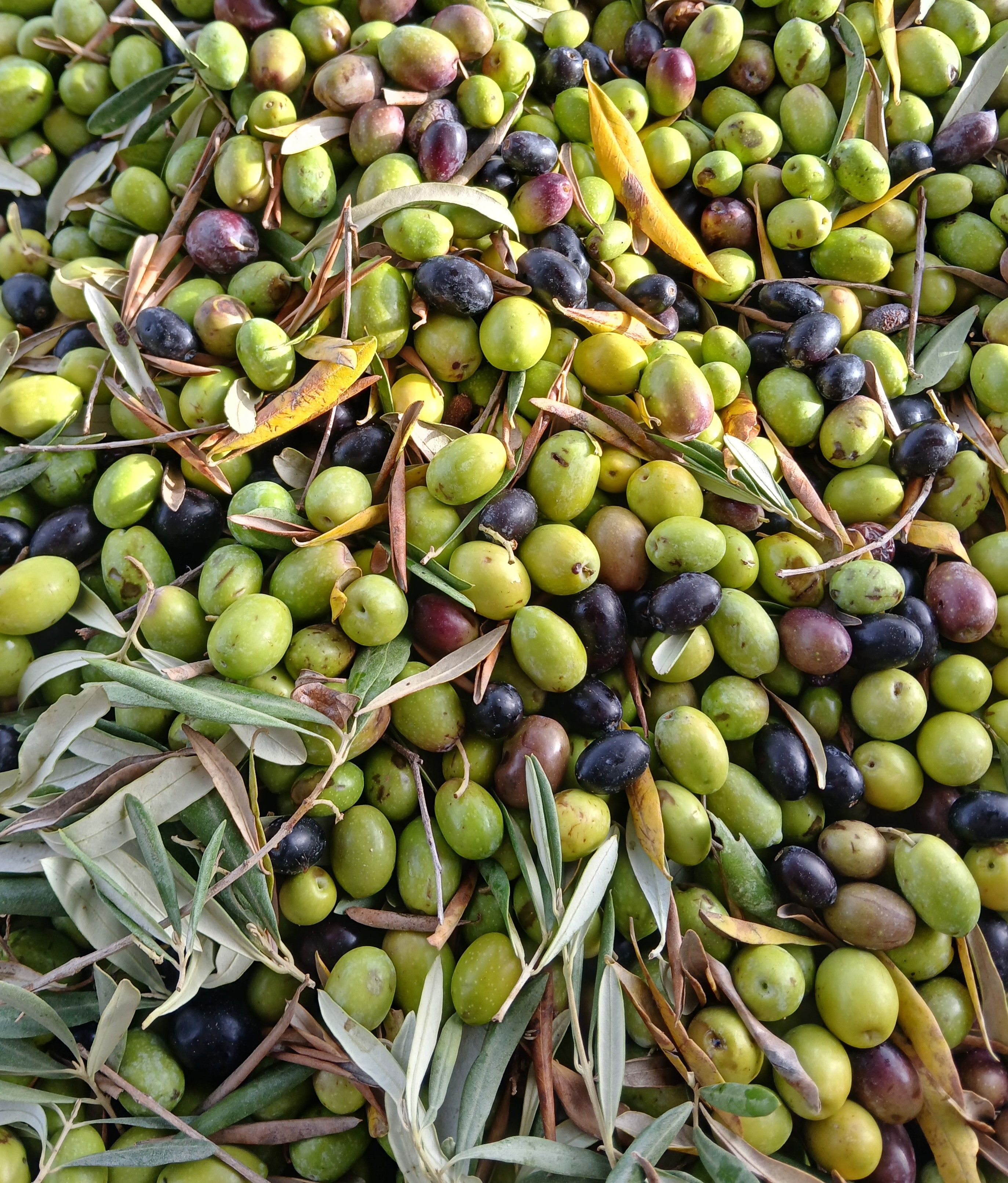
We harvested Olives from the grove at my new house! They are so pretty!

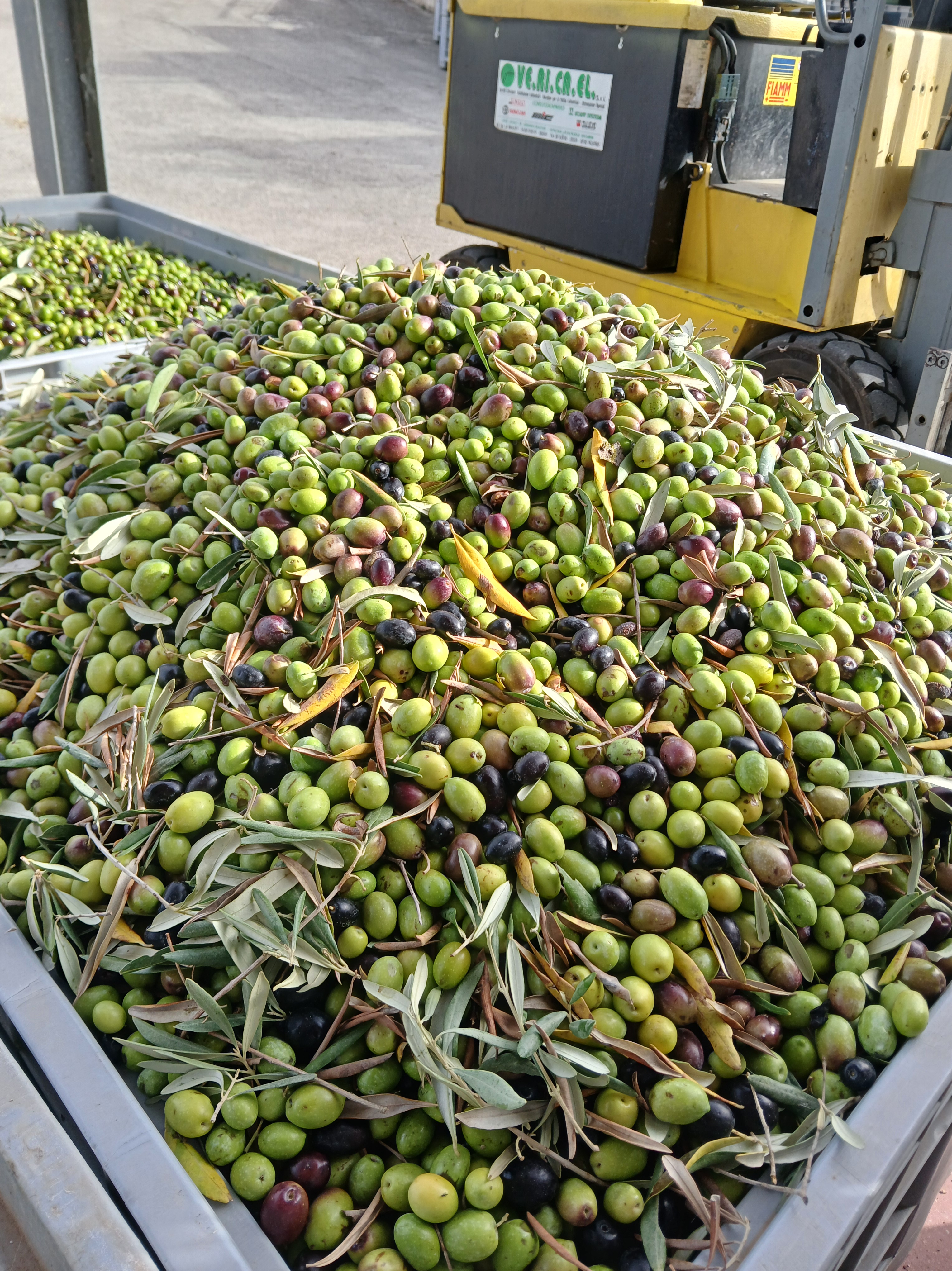
It was a hot, dry growing season and I am told that it was not a good year for olives. However, we harvested over 320 Kilos of olives and pressed 60 liters of extra virgin olive oil.

Signor Raimondo managed the harvest. He works early in the morning so I was not able to capture pictures of the harvest process at my house.

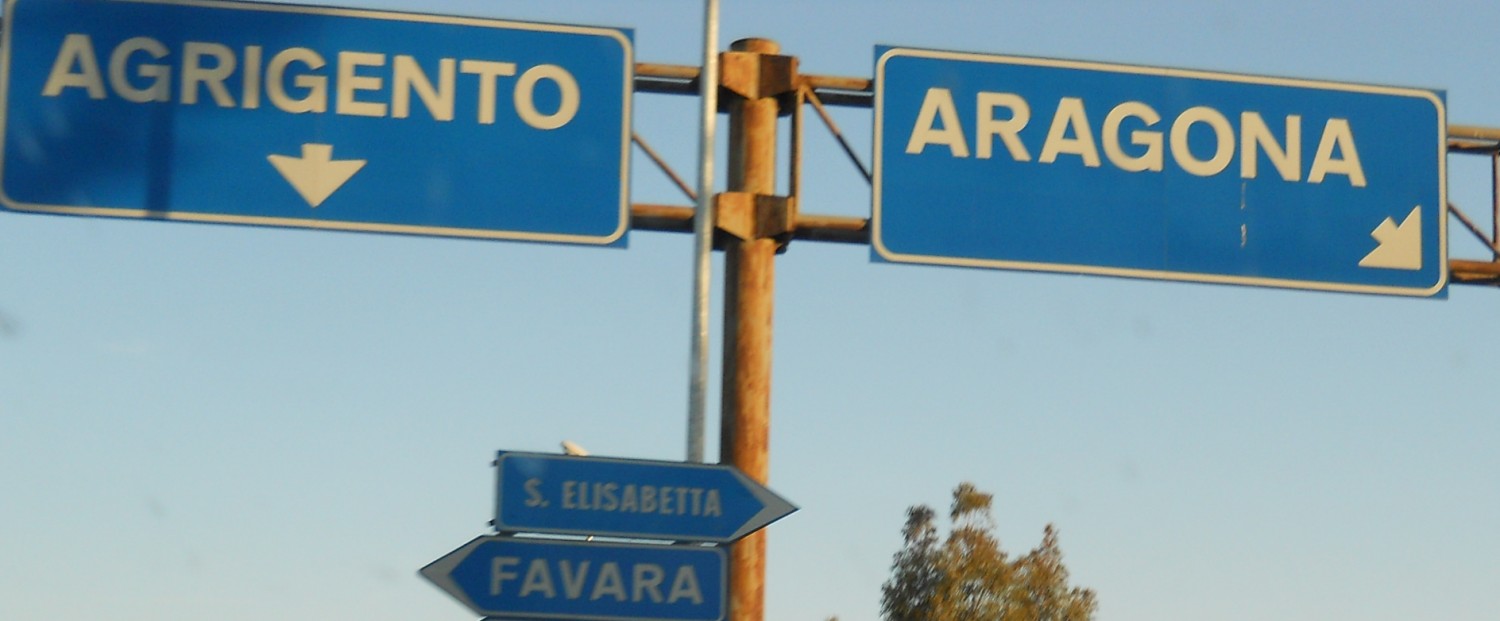
The following pictures are of my cousins, Vincenzo and Alfonso. They are retired businessmen who live in Belgium but have a beautiful summer house in Aragona. These photos illustrate the process of manually harvesting olives. The olives are raked off the trees and dropped on large nets on the ground. The olives are then gathered and transported to the Oleficio (olive press) as soon possible.


Olificiu!

The olives were pressed the same day that the harvest was completed.
Pressing was efficient and automated, the equipment was stainless steel and manned by technicians.

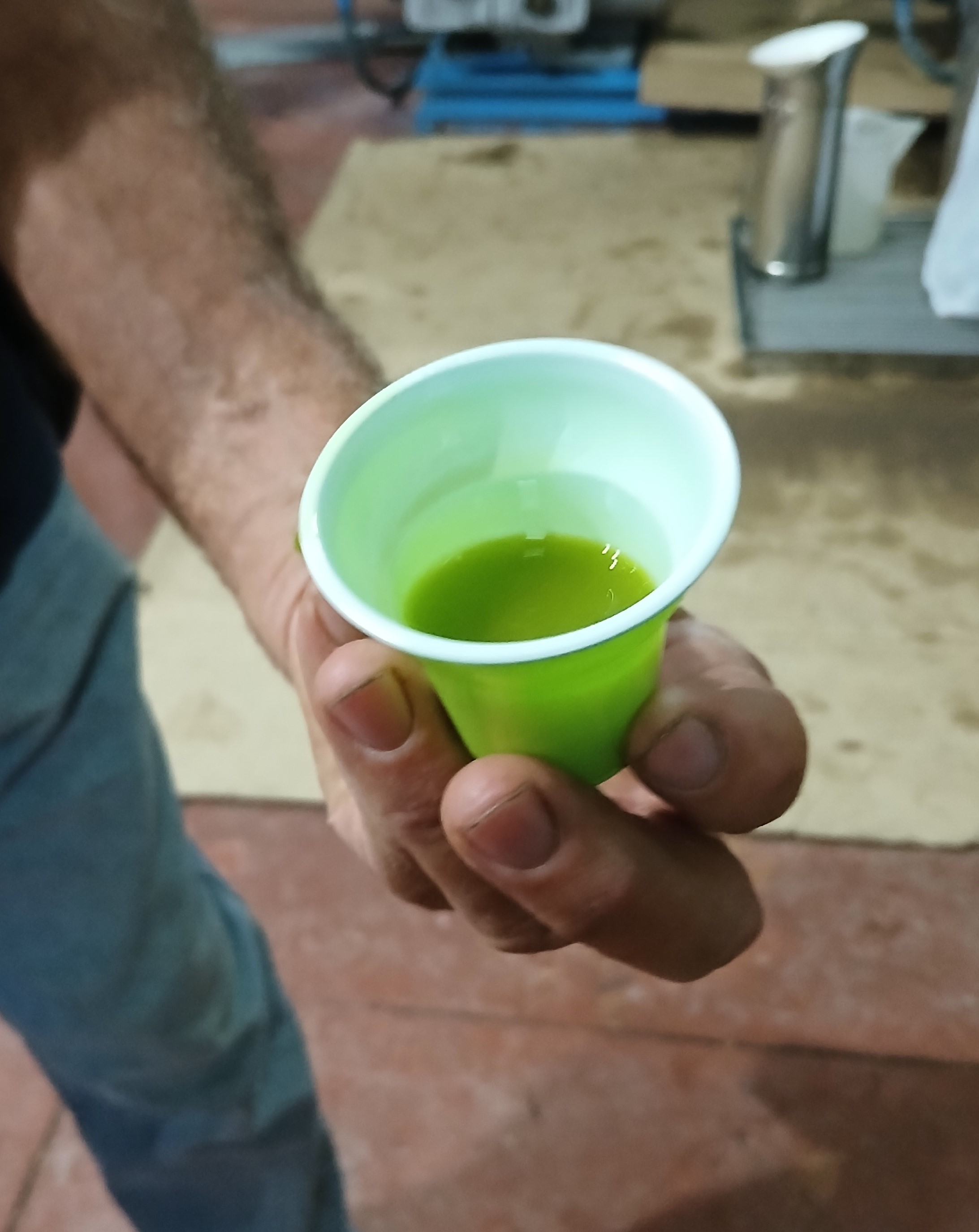
A fork lift dropped my olives into a hopper and conveyor belts moved to each machine. The olives were cleaned, crushed and stirred and mixed. We were able to follow our olives through each operation. We waited intently until our oil emerged from the press! It is not grocery store oil! The color is green and the flavor is strong. We set it aside to settle and mellow. It should be ready to use in a month.

I am grateful to have found Signor Raimondo. He is very knowlegeable and is passionate about agriculture. He steered us through this first harvest and I am happy to have enough beautiful, organic olive oil to last at least a year.

Signor Raimondo is now in the process of giving the olive trees a much needed trim and getting ready for future harvests!

Ulivi! (Olives!)

Passuluna Moderni

We are anticipating our main Olive Oil Harvest. Because olives are pressed immediately after harvest, we have to wait until the local Oleficio (Olive Press) is open for business for the season and Signor Raimondo (the gentleman who is helping me with my orchard) has time to manage the harvest.

In the meantime, Rose is has been busy preserving ripening olives for our home use. It is a multi-step process and she has been working on them for the last couple of weeks. She disappears into her little kitchen workspace periodically, and works on the various types of olives. Here are the procedures Rose has developed and follows:

Passuluna (Oil Cured Olives)

“Passula” is Sicilian for Raisin. “Passuluna” (pronounced pah-ss-uh-luh-nah) is a ripe olive that is treated with salt until it loses some of its moisture and becomes wrinkled, literally a large raisin.

There are specific black Passuluna varieties of olives. There is a Classic Variety that I don’t have in my olive grove and a Passuluna Moderna (Modern Variety) that I do have in my olive grove. Signor Raimondo gave us a bucket full of Classic Passuluna and we harvested a bucket of Passuluna Moderna. Rose has been working with both of them.

Passuluna Processing Steps

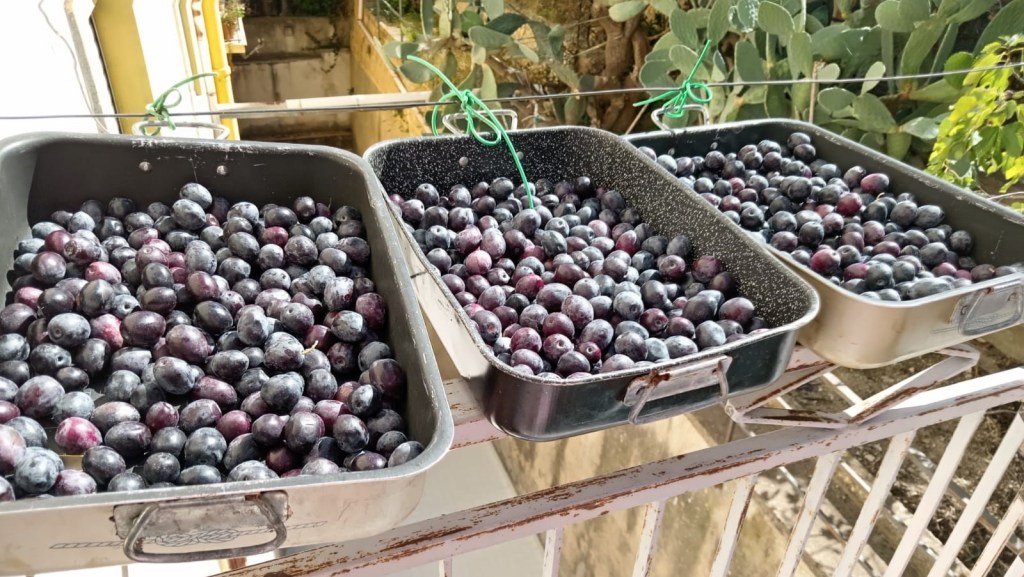
  • Harvest olives when they turn black.
  • Spread ripe olives in trays or racks and place in sun. This process may take several days. (We bring them inside at night.) They are ready for the next step when they begin to wrinkle.
  • Place sun cured olives in bowl, add small amount of salt and mix often. This process can take several days as well. They are ready for the next step when the olives are soft to the touch and wrinkled.
  • Wash olives several times to remove excess salt.
  • Blanch the olives: Place in boiling water. When water returns to boil, cook for about three minutes.
  • Drain well, cool, and blot dry with a clean towel.
  • Add olive oil to coat the olives, stir well, place in plastic bags or freezer safe containers and freeze.
  • Rose likes to freeze in “single-serving” portions, which for her, means one to two cup containers.

Passuluna are ready to be enjoyed as appetizers, or in cooking. Rose uses Passuluna in pizza, seafood dishes, stews, breads, wherever a salty, slightly bitter bite makes sense.

Completed Passuluna


Ulivi Scacciati (Crushed Olives)

Ulivi Scacciati (pronounced uh-leevee ska-chih-ah-tee)

Rose is also preserving green olives. This version uses a salt and water brine as a preservative. She disappeared into her work kitchen, following a pounding sound, we found Rose cracking green olives with the bottom of a heavy water glass. This is the first step to making Ulivi Scacciati.

Ulivi Scacciati Processing Steps

  • Crush olives. Rose uses a thick water glass. I have used a meat pounder.
  • Soak crushed olives in room temperature water, changing the water at least once a day for 3 days.
  • After the 3 day soak, drain olives.
  • Prepare brine. For each kilo of olives, combine 1 liter of boiling water and 100 grams of salt. Stir until salt dissolves and cool brine.
  • Add crushed olives to brine ensuring olives are covered with liquid.
  • If desired, add bay leaves and/or rosemary, and garlic.
  • Let stand at room temperature for at least 15 to 20 days.
  • Olives are ready to use when they are no longer bitter.

Ulivi Scacciati can be served as an appetizer or side dish or they may be used in recipes. There are many variations for seasoning Ulivi Scacciati. Rose’s preferred seasoning for an appetizer is: Olive Oil, sliced celery, grated carrots and red pepper flakes and a bit of minced or sliced garlic.

Completed and Seasoned Ulivi Scacciati

Pasta A Lu Scogliu e Frutta D’Estate

Seafood Pasta and Summer Fruit

Pasta A Lu Scogliu (Seafood Pasta)

Our weather has been blazingly hot! Turning on the oven is out of the question, so our family has been concentrating on quick, simple meals cooked on the stovetop.

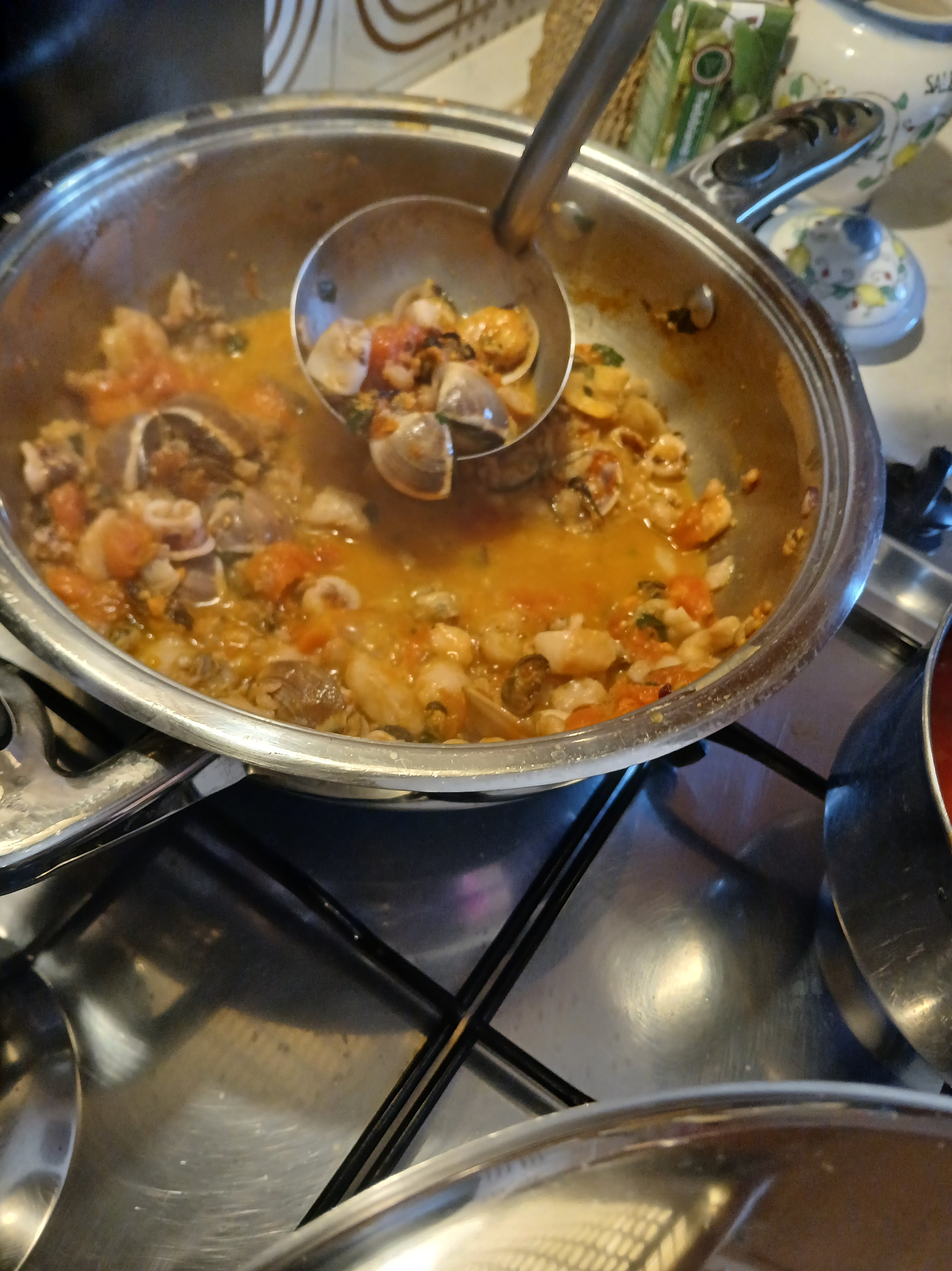
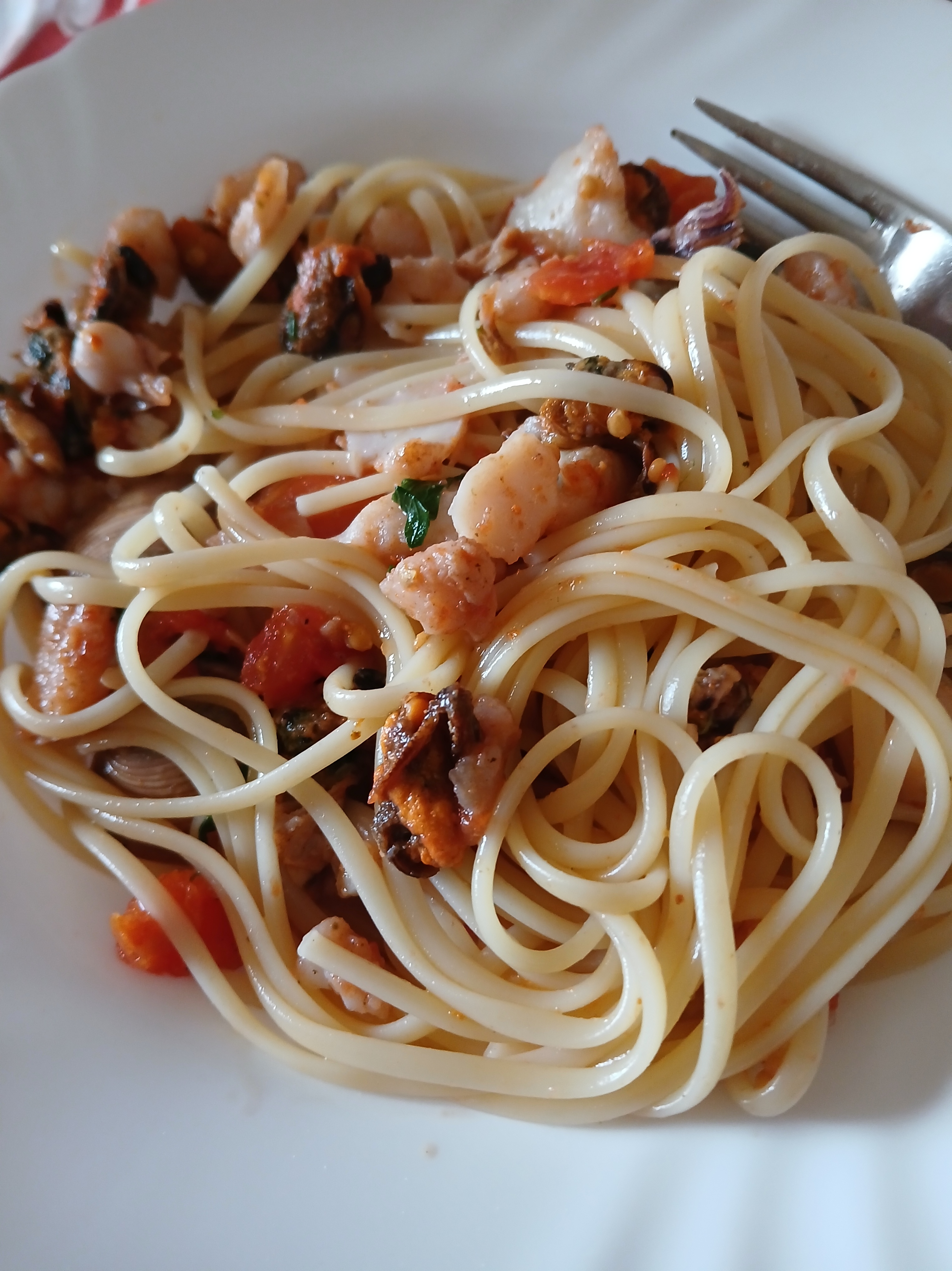
My niece, Maria Lucia bought a a mix of fresh seafood: Gamberetti (Baby Shrimp), Pesce Spada (Swordfish,) Calamari (Squid) and Vongole (Clams) at the Sciacca Fish stall at the local market. She used this mix to make Pasta A Lu Scogliu. The “Scogliu” is a rocky seashore, where some of the seafood is presumably found.

Here is her recipe:

Ingredients:

  • Olive Oil
  • Garlic Clove
  • Mixed Seafood
  • White Wine
  • Ripe Tomatoes, Peeled and Chopped Finely
  • Salt and Pepper to Taste
  • Finely Minced Parsley
  • Cooked Linguini or Spaghetti
  • Pasta Cooking Water as needed

Preparation:

  • Add olive oil and the garlic clove to a shallow skillet. Lightly cook garlic clove and remove when it begins to brown
  • Add Mixed Seafood and saute for a couple of minutes
  • Deglaze with White Wine and allow to wine evaporate
  • Add Chopped Tomatoes
  • Reduce heat to low
  • Partially cover skillet and simmer until tomatoes are cooked and sauce is formed (10 – 15 Minutes)
  • Drain pasta and toss into Mixed Seafood Sauce. If needed, add pasta water to loosen sauce.
  • Add minced parsley, toss and serve

Pasta Lu Scogliu was beautiful and tasty. As always, looking forward to enjoying it again!

Frutti D’Estate (Summer Fruit)

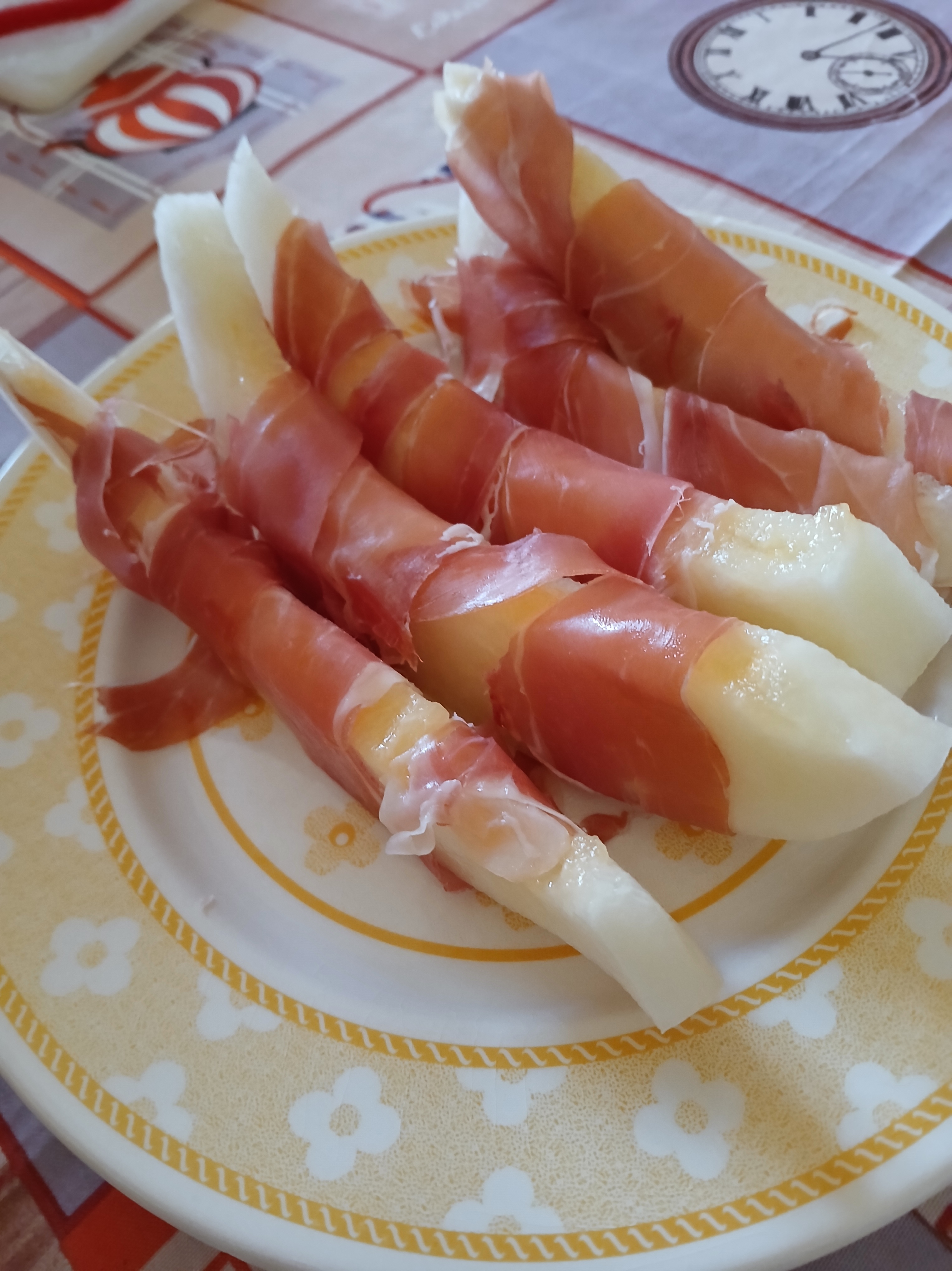
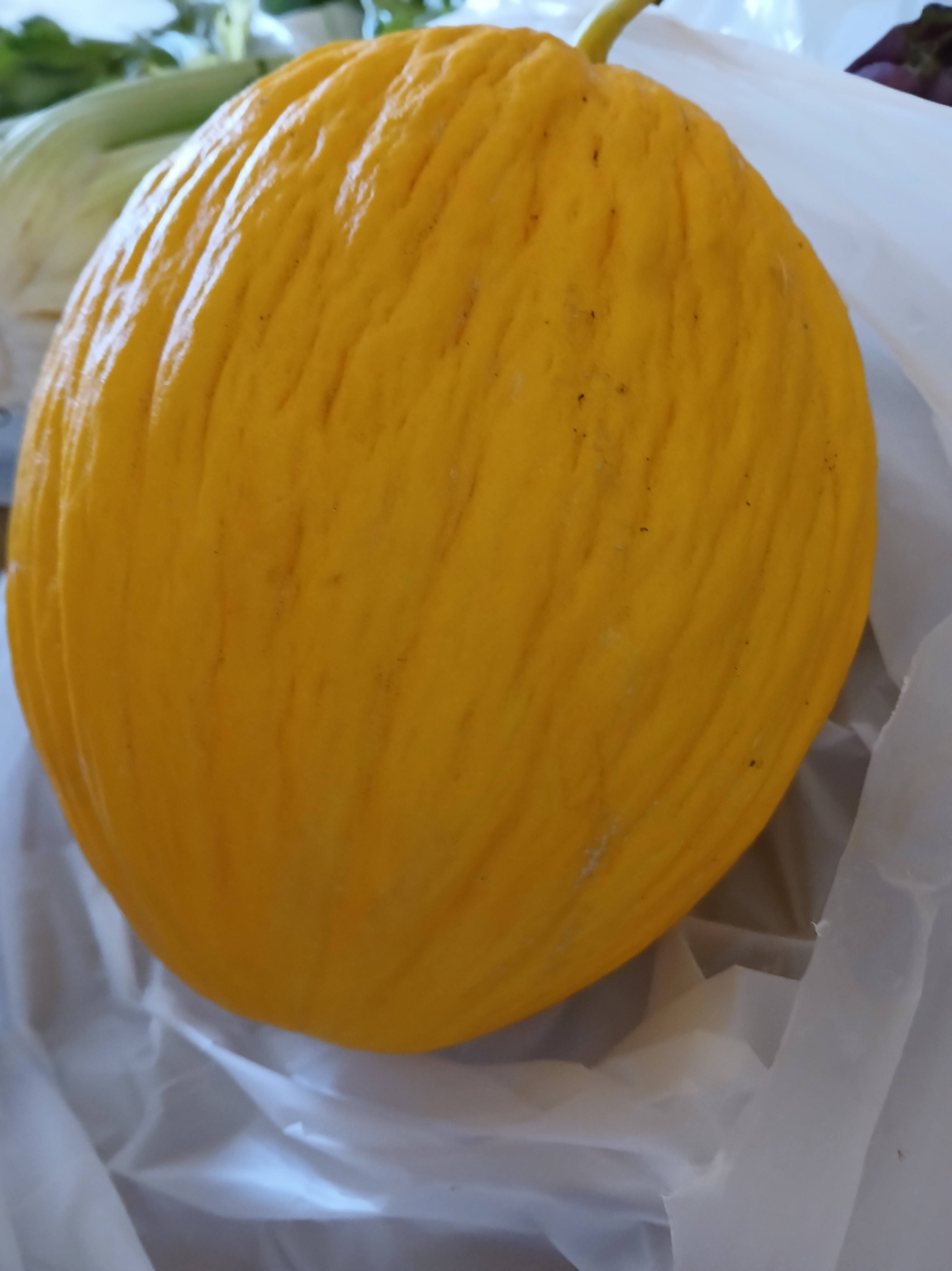
Summer fruit continues to evolve. My latest obsession is the Muluni Giallu (Yellow Melon.) It is sweet and juicy and the perfect accompaniment to prosciutto. It was a refreshing ending with our Pasta a Lu Scogliu.

Chi C’e Nu Sacchettu A Lugliu

What is in the bag in July!

U Sacchettu continues to change with the season. Here is some of the bounty:

Lumii (Lemons) – From my new house! I don’t know the variety but it is “everbearing” which means that it produces fruit and blossoms at the same time. My niece and her children had a lot of fun picking a small sacchettu.

Gelsi (Mulberries) – We call them “Cenzi” (pronounced “chen zee”) in Sicilian. They are also from a tree at my new house! The Cenzi are almost overripe but they are juicy and flavorful and very messy to pick at this stage. I have plans for Jams and Jellies with next year’s crop. If we can pick more over the next few days, I will serve over Lemon Granita.

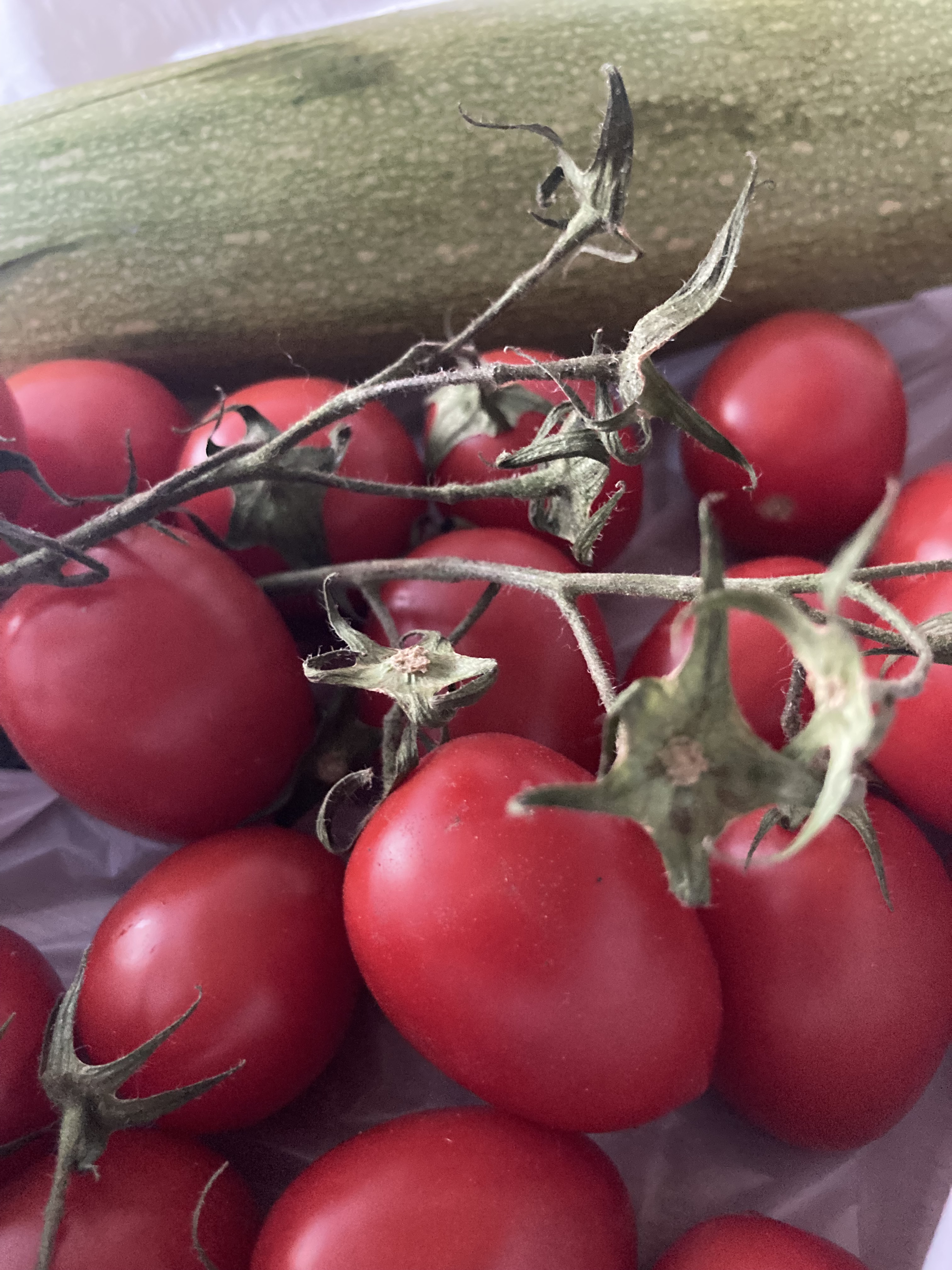
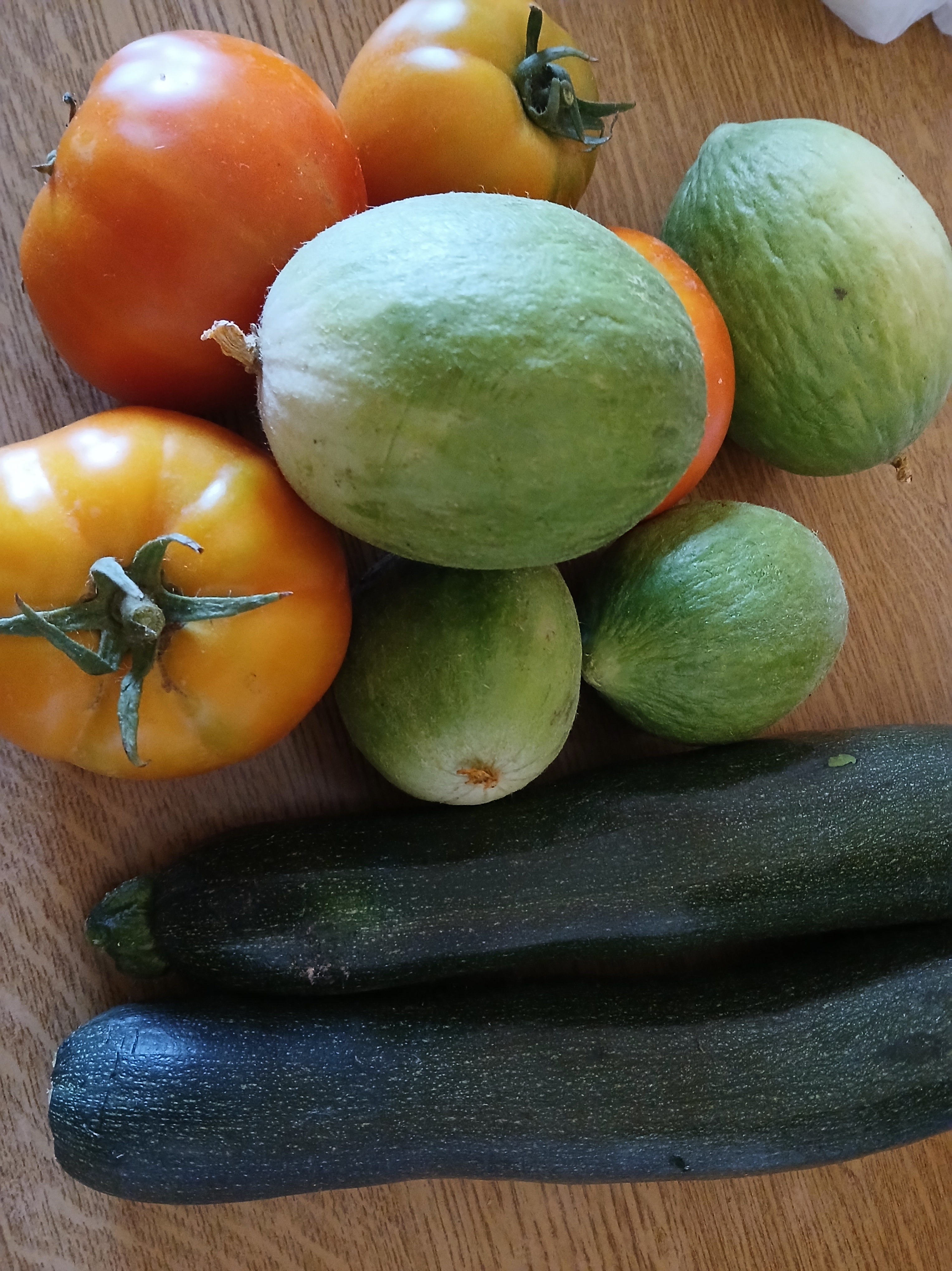
Verdura pi Insalata (Salad Vegetables) – Large underripe tomatoes and cucumber. The cucumber is round variety that looks like a small melon. It has a great Sicilian name – Battagliuni (pronounced “bah-ttah-liuni”) It is sweet and crispy with small seeds. We will make our favorite summer salad: Tomatoes, Cucumber, Red Onion, Olive Oil, Balsamic Vinegar and Oregano.

Pumadoru (Tomatoes) – This Tomato variety also has a great Sicilian name – Pizzuteddru – for the little point on the end. This small tomato is the used to make Sucu (Sauce) It is pulpy with few seeds.

Persichi (Peaches) e Millingiani (Eggplant) – The peaches continue to improve, they are ripe, juicy and smell wonderful. These particular eggplants are the prettiest I have ever seen!

It is blazingly hot these days. So Rose will not be turning on the oven, she will make Peperonata for Dinner. This Peperonata is a one pot meal cooked on the stove. It will include today’s Eggplant, Peppers, Potatoes, Cucuzza, Onions, Tomatoes and Oregano. She will serve fresh crusty bread to dip in the vegetable juices. It is one of our favorite meals, looking forward to Dinner!

Accattavu Una Casa!

I Bought a House!

I closed on my new house today! It needs some updates to make it work for me, but the bones of the house seem good. My favorite feature is the Veranda that extends the width of the house. The Veranda will be a lovely dining and relaxing spot. I look forward to making it beautiful!

The property includes an Olive Grove and various fruit trees. I love the land around the house. This feature is both exciting and daunting. The previous owner, Signor Filippo, loved the property and took great care of it. The last few years he has not been able to tend the land so it needs a bit of tender loving care. I hope to give it some love and make it productive. Wish me luck!